This post was updated Aug. 2 at 6:08 p.m.
Facing a federal funding denial, a UCLA research group is turning to OnlyFans to raise money and bring awareness to long-term research funding difficulties.
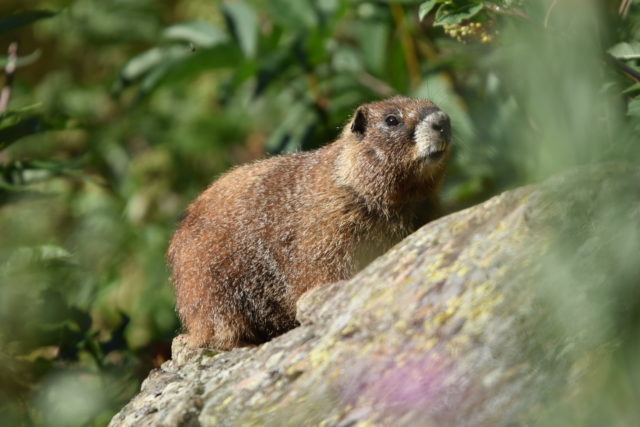
The Blumstein Lab, which studies marmot behavior, started videos of the large rodents on OnlyFans – a subscription-based adult entertainment content creation platform – under the name “OnlyMarms” after the National Science Foundation rejected the researchers’ proposals to renew their grant. The researchers have received thousands of dollars in donations and subscription money since launching the account.
“OnlyMarms is meeting the moment of our public frustration over what this country funds,” said Emily Renkey, a graduate student in ecology and evolutionary biology and student researcher in the lab. “It may be symbolic for a lot of people of the lengths researchers have to go in order to fund really important work.”
Securing grants under the Trump administration has become increasingly difficult. The federal government has proposed sweeping changes to the United States Office of Management and Budget’s framework for managing federal grants and suspended millions in universities’ research grants.
[Related: Federal government suspends research funding to UCLA]
For 11 years, the Blumstein Lab received funding from the NSF Long Term Research in Environmental Biology grant, said Dan Blumstein, a professor of ecology and evolutionary biology and the principal investigator at the Blumstein Lab. He added that the grant allowed the lab to hire people on a quarterly basis.
Researchers are required to submit a proposal with a new research plan to renew the grant, according to the NSF’s website.
However, after multiple proposals for continued funding, the NSF program panel decided the lab had already collected enough long-term data to answer their research questions, which Blumstein said he disagreed with.
The lab’s marmot project began in 1962 under Ken Armitage at the Rocky Mountain Biological Laboratory in Colorado, Blumstein said. Today, it’s the second-longest continuous study of individually marked mammals in the world, he added.
Blumstein said he took over the study in 2001 and co-runs it with Julien Martin, a professor at the University of Ottawa. The lab studies social and anti-predatory behavior in yellow-bellied marmots.
The team draws markings on the backs of the marmots to make them easily observable, said Taylor Bastian, a doctoral candidate in ecology and evolutionary biology. Researchers gave the marmots affectionate names, including “Jamba Juice” and “Egg,” Bastian added.
The lab’s data consists of observations, body measurements and blood samples of the marmots, Bastian said. Researchers upload clips of marmots playing and alarm calling on the OnlyFans account, Renkey added.
“The OnlyMarms account is basically an opportunity for us to capitalize on a lot of the camera trap data that we’ve compiled,” she said.
Viewers can subscribe to the account for free to access OnlyMarms content and leave a donation for the lab, Renkey said.
The lab has raised more than $6,000, which OnlyFans has taken 20% of, from OnlyMarms as of Wednesday, according to a Rocky Mountain Biological Lab Marmot Project Instagram post.
The marmot researchers – marmoteers, as they call themselves, – are also conducting outreach on Instagram, including by posting for Fat Marmot Week to engage the public in their research, said Katie Adler, a doctoral student in ecology and evolutionary biology.
Viewers can vote for which marmot they think will be the fattest in preparation for winter hibernation from Aug. 24 to Aug. 29, Adler said.
The competition is a spin off of Fat Bear Week, during which people track the weight gain of Alaskan bears ahead of their winter hibernation, Renkey said.
“That’s a huge part of it – making science more accessible and making it exciting for people who could never have thought that they’d be interested in something like this,” Adler said.
Renkey said she hopes the project’s OnlyFans, which has more than 7,000 visitors, brings awareness to the unique difficulties around securing research funding in the U.S.
“We’re all working with the hand that’s dealt to us,” Bastian said. “Things have been taken away. We’re trying to distribute things as much as we can.”
Long-term research studies are difficult to fund and maintain, Blumstein said. The marmot lab has supported a team to work in the field for five months annually and has trained hundreds of people over its 65-year history, he added.
“Understanding the world around us is something where there might not be a direct profit,” he said. “But we need to understand the world around us. We need to understand the role of species in their communities.”




Comments are closed.