CHICAGO – The Big Ten is the best league in football.
At least, that’s what Indiana coach Curt Cignetti said at the 2026 Big Ten Media Day.
And it is not a horribly difficult assertion to defend. Just look at the last three national champions.
But as competitive as the conference may be, it does not exist in a bubble.
In fact, the entire college football landscape has witnessed immeasurable transformations over the last several years, and its trajectory may still be unpredictable as new eligibility rules, technology and opportunities spur unprecedented shifts to the very fabric of the NCAA.
One of the most prominent changes in recent memory is the NCAA’s new age-based eligibility rules. The NCAA altered requirements June 23 that would allow student-athletes to be eligible for up to five years of competition, with the window beginning on an individual’s first academic year or their 19th birthday, whichever comes first.
What has now been colloquially referred to by many as the “5-for-5 rule” essentially eliminated redshirt rules and medical hardship waivers – both of which were common means by which athletes extended their eligibility beyond the traditional four years – for a consistent time-based formula.
For football coaches, this now allows more flexibility with roster construction and lineup management. Before, many players would be redshirted so that coaches could retain them for longer, especially if certain individuals were not seen as ready enough to make an impact on the field quite yet.
However, the new eligibility rules may open the door for more coaches to be willing to play younger students sooner, even if just in smaller roles.
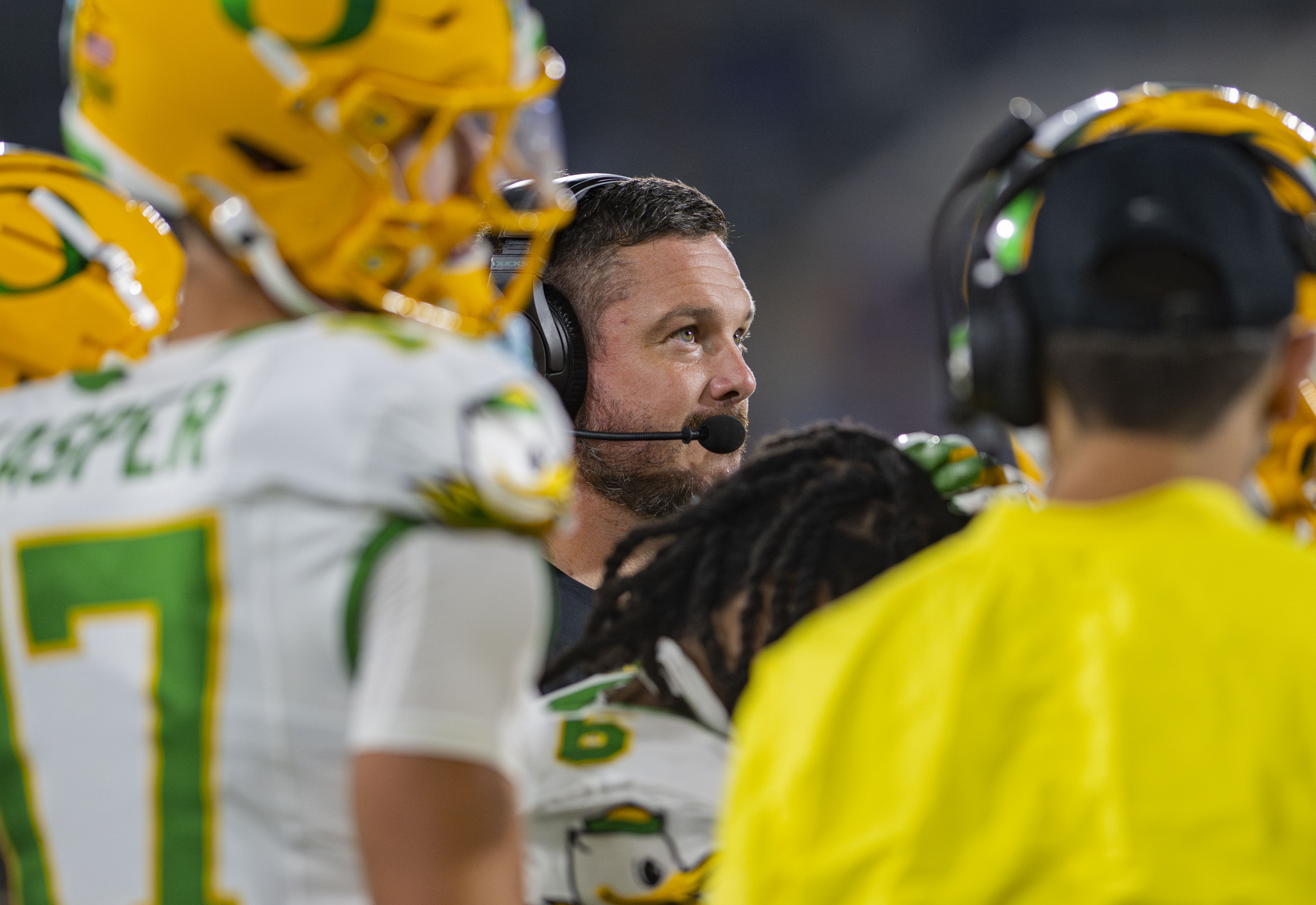
“If you’re good enough, you’re good enough for us,” said Oregon coach Dan Lanning. “If guys are playing above-the-line football, we want to find roles for them on our team. As you play in those roles, your role grows, and you perform. … That’s what we’re looking for. How can we expose them to that? But now there is that decision that no longer has to be made: Do you preserve this guy’s redshirt or do you go ahead and play him? And now we have the opportunity to play him.”
UCLA coach Bob Chesney seconded the statement, explaining that before, many players would be held back if they only were good enough to run kick returns or other small packages of plays. Now, the elimination of the redshirt will likely embolden coaches to play athletes sooner without fear of them losing eligibility faster.
Chesney questioned as to whether these conditions may one day increase roster caps, which currently stand at 105 following another recent NCAA ruling last year.
While the new rules will extend future eligibility for athletes to come, the NCAA initially declared that those whose windows closed this past competitive season would not receive any extensions. However, a ruling from Colorado federal Judge Charlotte Sweeney on Friday directly contradicted the NCAA after she granted a preliminary injunction to give an extra year of eligibility to those from the recruiting class of 2022.
[Related: Formerly retired UCLA men’s basketball guard Donovan Dent enters transfer portal]
Sweeney clarified that the decision would not block transfer portal rules already in place, indicating that those who receive an additional year would only be able to play for their former teams unless they officially entered the transfer portal in January.
But nothing seems to have been a hotter topic over the last several years among college sports discourse than name, image and likeness.
On Friday, both the Big Ten and the SEC voted to support the Protect College Sports Act, which was initially introduced in June to limit player eligibility and teams’ NIL recruitment spending. After compromises were reached to increase the proposed salary cap, both Power Four conferences signed on.
“We’ve watched the NCAA try to enforce it for a long time now,” Chesney said. “It’s very hard to do. There have to be other police entities that exist.”
As the bill continues through Congress, many players have taken full advantage of NIL, whether from their schools or other third parties, citing it as a way to support their families.
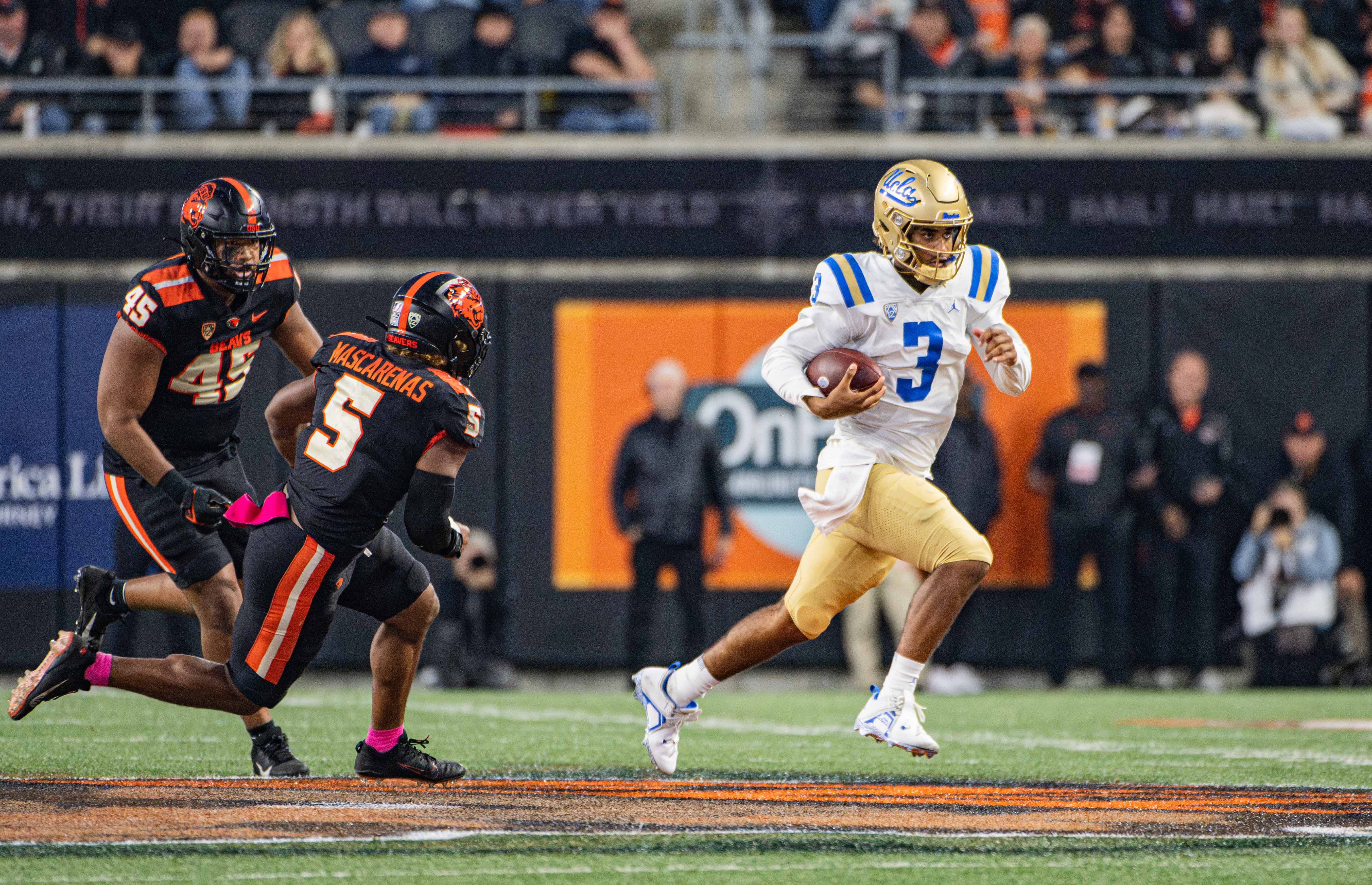
UCLA-turned-Oregon quarterback Dante Moore said NIL has helped him and his family, citing his background as the son of a single father in a blue-collar town in Detroit.
“At the end of the day, it’s helping us, helping our families out,” Moore said. “It’s just the new age of how college football is, and we appreciate it. … It’s a blessing.”

Comments are closed.