This post was updated Aug. 9 at 6:48 p.m.
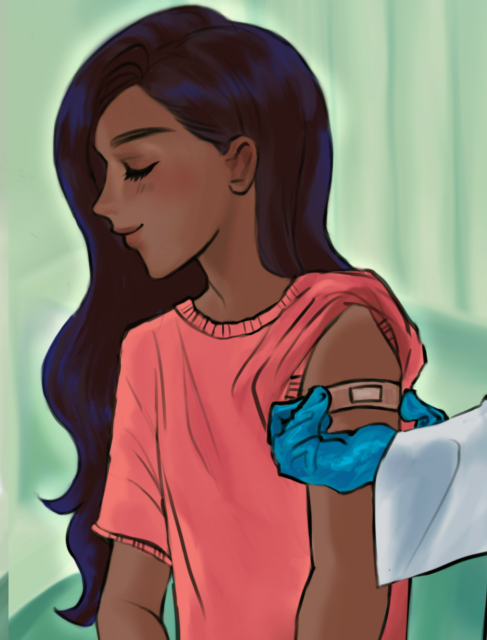
Measles cases in the United States have reached a new peak since the 1990s amid falling national vaccination rates.
Dr. Robert Kim-Farley, a professor in residence in the epidemiology and community health sciences departments at the UCLA Fielding School of Public Health, sat down with Daily Bruin reporter Catherine Wang for National Immunization Awareness Month to share his concerns about – and advice on how to navigate – rising vaccine misinformation.
Kim-Farley, who is board-certified in preventive medicine and public health, has held leadership and advisory positions in the World Health Organization, Centers for Disease Control and Los Angeles County Department of Public Health. He received his medical degree from UC San Francisco and his master’s in public health from UCLA.
This interview has been edited for length and clarity.
Daily Bruin: How would you describe the current vaccine landscape in the United States?
Robert Kim-Farley: The guidance that was once considered a scientific consensus, if you will, for the United States – being done by the Centers for Disease Control and Prevention – has come under concern because of the polarization of vaccine recommendations, for example. I think (there are) some concerns about the possibility of confusion, especially in the eyes of the public, about the current recommendations and vaccines.
The reason I am concerned about the current situation is that we are seeing vaccine coverage levels drop in the United States. In the 2024-25 school year, national kindergarten coverage dropped to 92.5% for measles, mumps and rubella vaccine. We’re seeing these outbreaks happening now in the United States because we’re dropping below this 95% coverage levels that is required to achieve what’s called herd immunity, where you get general protection from transmission within the population. We are just about to lose, in the United States, our certification of having eliminated measles.
[Related: UCLA health experts voice concern over CDC child vaccination guideline rollbacks]
DB: Why do you think these immunization rates are dropping?
RKF: There’s been a strong anti-vax movement, and that is sowing doubts in people’s minds about vaccines. They’re (parents are) looking at these side effects of vaccines and saying, ‘Oh my goodness, I don’t want my child to have those. Better not to vaccinate.’
If you look at a dangerous curve in a road, let’s say the statistics show that, over the last year, 1,000 people died going over this dangerous cliff in the road. That’s like the disease. What do we do? We go ahead and put up a guardrail, and that’s like the vaccine for the disease. The next year, the statistics show that nobody died going over this dangerous curve. However, there were three people who got injured hitting the guardrail. That’s like the side effects of vaccination.
Some people will say, ‘Oh my goodness, this guardrail is injuring three people a year. We’ve got to take it down.’ But what’s going to happen? You’re going to go right back to the 1,000 people dying going over this dangerous curve.
DB: What advice would you give our readers about evaluating any information related to vaccines on their own or on social media?
RKF: Those that are under 19 can take a look at the American Academy of Pediatrics recommendations, or those that are 19 and above to take a look at the recommendations of the American Academy of Family Physicians, or for those that are pregnant, to look at the American College of Obstetrics and Gynecology (American College of Obstetrics and Gynecologists). These are trusted sources backed by scientific data.
If they come across other things that is advising not to use vaccination, take a look. What are those sources? Are those published in peer-reviewed journals?
DB: How would you compare today’s environment around vaccines to previous periods you’ve experienced?
RKF: Globally, it’s often just the reverse – parents are not getting easy access to vaccinations, and they’re really clamoring for it. In a lot of developing countries, the demand is extremely high because they realize children in their own villages, dying of measles, or they’re coming down with polio. They see it, so it’s very easy for them to understand the value.
In the United States and other developed countries, because of the very fact that we’ve had such successful vaccination programs and the diseases are very rare now, there’s a lot of parents that have never seen – in fact, there’s even physicians that have never seen measles. They tend to think, ‘It’s not a problem.’
DB: As we are heading into the fall and people are coming back to campus, what should people know about the flu, COVID-19 and any of those seasonal vaccines?
RKF: It’s (National Immunization Awareness Month is) done in August because it’s trying to highlight the importance of routine vaccination across the United States and also serves as a reminder to families for the upcoming school year and respiratory illness season.
Now’s the time to think: ‘Do I need any vaccines, or are there any recommended vaccines, even if they’re not required, that I should be considering?’


Comments are closed.