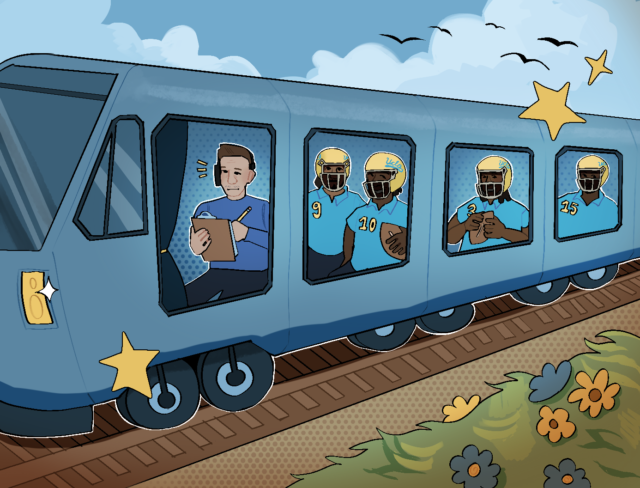
It’s time to board the Chesney train.
UCLA football, the Westwood faithful and the media have echoed that sentiment for nearly nine months now.
It’s not hard to understand why: Labeling the Bruins’ 2025 season a disaster might even be sugarcoating it.
It’s almost a miracle to see how far the program has come less than a year after all three of its top coaches bid their farewells before the halfway point of the season.
[Related: Fos Era over in Westwood as UCLA parts ways with DeShaun Foster after 15 games]
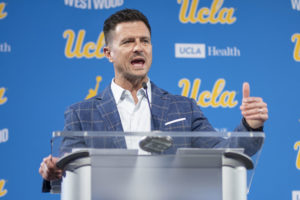
So when Bob Chesney officially calls his first play as UCLA’s No. 20 head coach all-time, there really is nowhere else to go but up.
Right?
[Related: UCLA football expects to hire James Madison coach Bob Chesney as next coach]
Well, the optimism isn’t unwarranted.
The former James Madison head honcho is coming off a 2025 campaign in which he led the Dukes to a 12-2 record, their highest AP poll ranking ever, the Sun Belt championship and their first-ever College Football Playoff appearance. The Dukes came up short but still dropped 34 points on then-No. 5 Oregon.
And his introduction came at the perfect time, too.
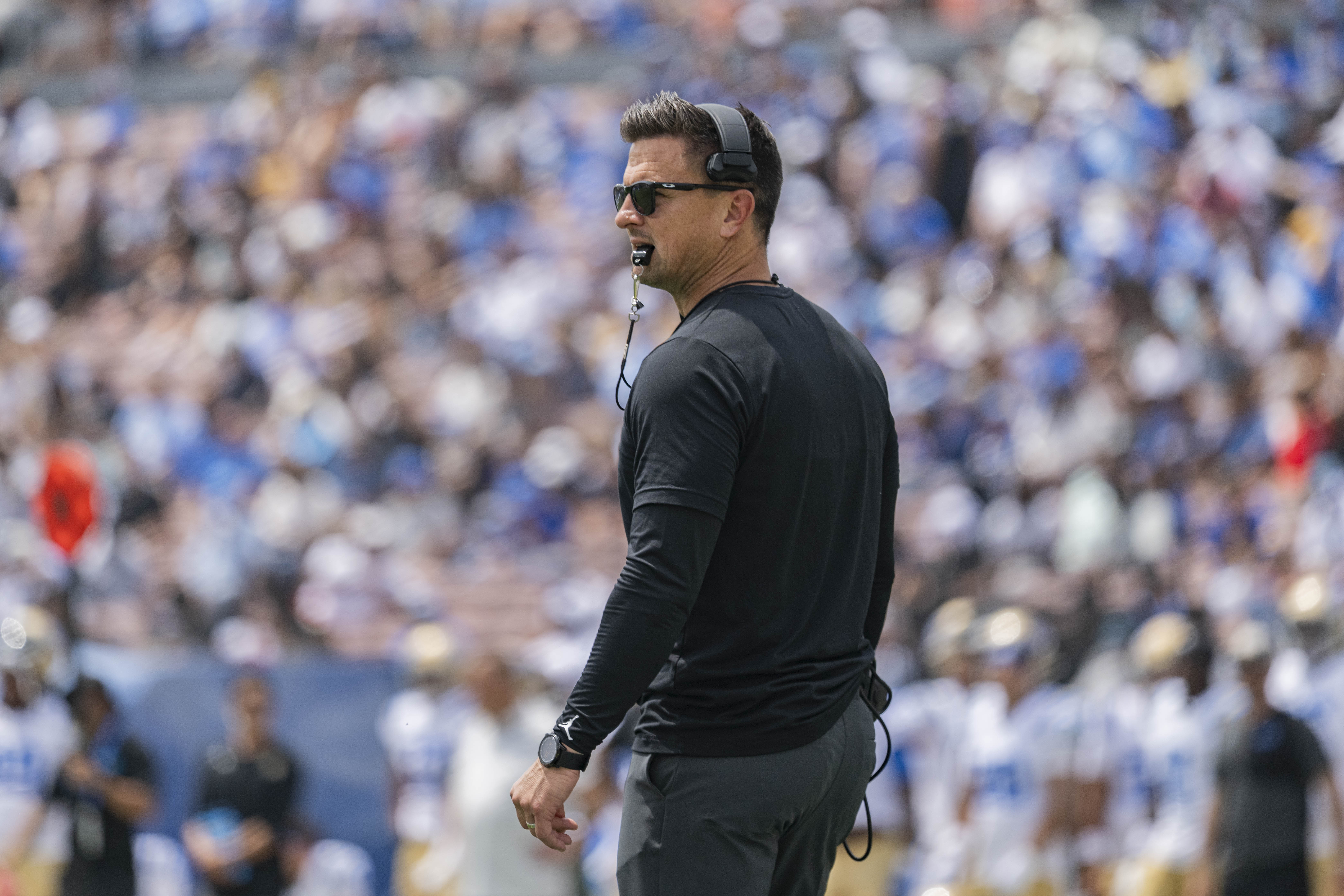
Following the Foster fallout, it seemed like recruits were decommitting left and right. I mean, who can blame a kid coming out of high school for not wanting to play for a program that looks to be in such disarray? Not to mention how many players threatened to transfer.
In fact, many initially did.
But when Chesney walked into the room, perceptions of UCLA’s football program as dysfunctional changed almost instantly. Franchise cornerstones – including senior quarterback Nico Iamaleava and senior defensive backs Cole Martin and Scooter Jackson – all agreed to stay in Westwood.
[Related: Quarterback Nico Iamaleava to return to UCLA football for 2026 season]
It wasn’t a one-time fluke, either.
Chesney has seemingly revolutionized UCLA’s recruitment, hosting dozens of high school recruits and coaches from across the country throughout the Bruins’ spring practices. During these sessions, Chesney focused on establishing and maintaining strong rapport with all of his potential recruits, while giving them insight into what goes on in team meetings and a true understanding of what UCLA football really means.
[Related: Bob Chesney’s recruiting approach fuels new era in Westwood]
Consequently, UCLA’s 2027 recruiting class is currently ranked No. 19 by 247Sports, up from No. 36 in 2025 – Foster’s only full cohort. The 2027 class is the highest Bruin ranking since 2018, has six more blue-chip recruits than in 2025 and even features UCLA’s first five-star athlete since quarterback Dante Moore in 2023.
And when you take into account the plethora of projected starters who followed Chesney from Harrisonburg, Virginia, the Bruins somehow have the talent to make immediate noise while also setting themselves up to ride the railroad into a new golden era.
When a former Sun Belt head honcho joins a Power Four program and enacts instantaneous change, I find myself wiping my glasses and wondering whether I’m looking at Chesney or national championship-winning Indiana coach Curt Cignetti.
But let me press the brakes on my own train of thought for a second.
Holding the Bruins – who just had their worst record since 2018 – to the same standard as the team that walloped them by 50 points Oct. 25, proceeded to stay undefeated and then won the 2025 CFP championship with the Heisman winner has to be ludicrous. Right?
Probably.
Bruin fans likely shouldn’t be calling it championship or bust. So what should they expect?
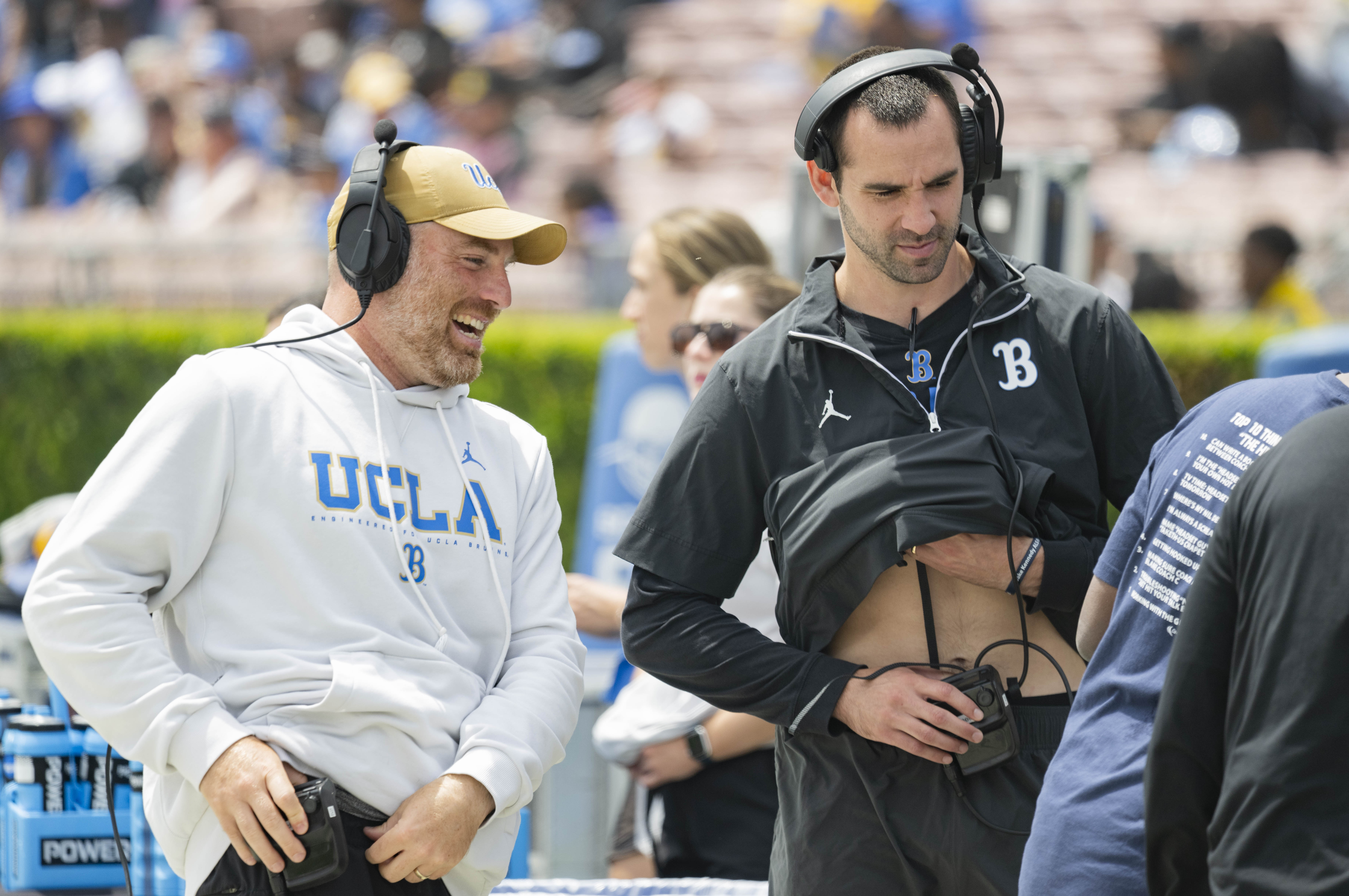
Chesney brought with him offensive coordinator Dean Kennedy, who spent two seasons with the Dukes. Kennedy guided a JMU offense that ranked No. 9 nationally in scoring, including four 50-point performances.
[Related: Chesney unveils strong coaching staff, signals new era for UCLA football]
Kennedy also helped develop quarterback Alonza Barnett III, the 2025 Sun Belt Player of the Year who ranked second on JMU in ground yards. The coordinator’s success with a speedy quarterback like Barnett – who rushed for nearly 600 yards and 15 touchdowns last season – is a positive indicator for Iamaleava, the Bruins’ leading rusher last season.
Kennedy is no stranger to dual-threat quarterbacks, and UCLA fans should continue to expect Iamaleava to embrace the run game. The Long Beach local has always had the talent – logging 10 career rushing touchdowns – but Kennedy should provide the healthy ecosystem he needs to achieve his fullest potential.
But the Dukes’ No. 1 rusher is a name Westwood should know.
Fifth-year running back Wayne Knight rode the Chesney train from Harrisburg to LA after a career year at JMU where he ran for 1,373 yards – No. 7 in the nation – and nine touchdowns. And after a tailback room in which no one exceeded 400 ground yards last season, Knight will look to be the first 1,000-plus-yard runner at UCLA since now-Super Bowl champion Zach Charbonnet in 2022.
[Related: Film breakdown: UCLA football to be joined by running backs Wayne Knight, Dylan Lee]
Knight was quietly one of the nation’s best offensive weapons last season, notching over 2,000 all-purpose yards. The Smyrna, Delaware, local also showcased his versatility last season, posting nearly 400 receiving yards on just 40 catches. Knight’s familiarity with a Kennedy-led offense should translate to creating instant yardage for a squad that ranked in the bottom five of the Big Ten in third-down conversions.
Between Iamaleava’s scrambling ability, Knight’s burst of speed and the return of running backs senior Jaivian Thomas and fifth-year Anthony Woods, the Bruins will likely unleash a formidable run game filled with jet sweeps, read actions and other creative plays that swarm opponents in 2026.
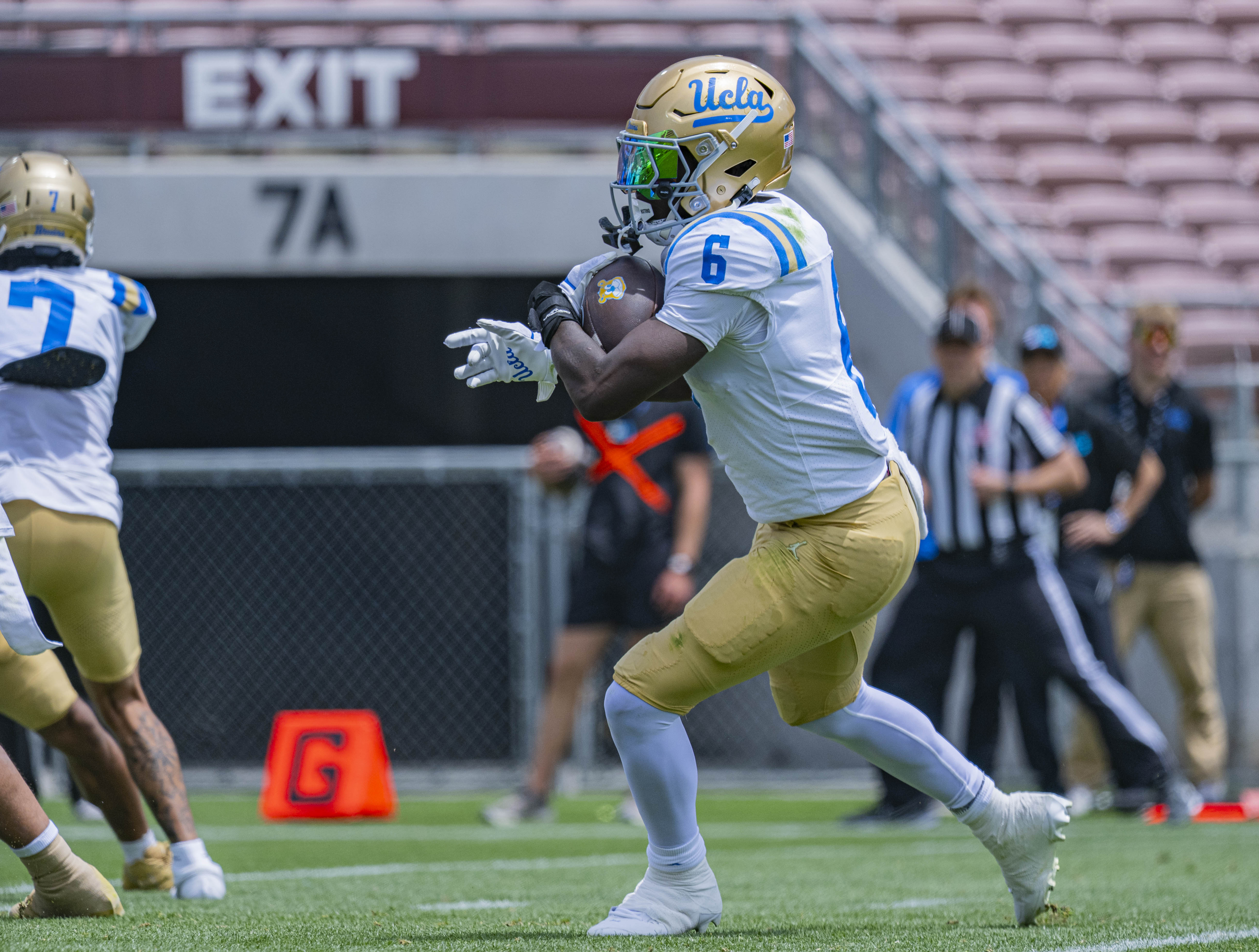
And while the passing game may not always be how UCLA wins games – the Bruins ran for more yards than they caught in two of their three wins last season – the revamped receiver room should more than hold its own in supporting the run.
Projected to be the X receiver next season is Leland Smith. The fifth-year comes to Westwood after posting 688 yards, 43 receptions and three receiving touchdowns last season with San Jose State. With a 6-foot-4, 218-pound frame, Smith provides a fast tempo to the offense and will be Iamaleava’s go-to deep threat.
[Related: Film Breakdown: UCLA football rebuilds wide receiver room through transfer portal]
Standing opposite Smith is senior Landon Ellis. The former Duke is another strong wideout who led James Madison in receiving last year with 624 yards and five touchdowns. While unlikely to be the No. 1 option, Ellis’ already-established relationship with Kennedy and experience as a tactical route runner in JMU’s spread offense last season should provide him with a healthy amount of targets.
The Dukes’ run-heavy game – especially on first and second down – often forced opponents to stuff the trenches, causing linebackers and safeties to leave pass-catchers open. As a result, Ellis should excel as a go-to third-and-medium target. His 65.2% per-target success rate last season, combined with his hands and body control, provides Iamaleava with another red-zone wideout.
Of UCLA’s top four pass-catchers, senior Mikey Matthews is the only returner. But between Smith and Ellis, as well as the additions of a young Brian Rowe Jr. from South Carolina and NCAA champion Semaj Morgan from Michigan – both of whom are speedy options out of the slot – Iamaleava has a new-look flurry of weapons with which he can truly showcase the same toolkit that brought Tennessee to the CFP in 2024.
Protecting the signal-caller is an offensive line coached by former Dukes coach Chris Smith, who helped make big splashes in recruitment to retool Iamaleava’s protection.
Following Smith is senior Riley Robell, who will slide over from the guard spot to be UCLA’s starting center next season, and fifth-year Carter Sweazie. Both Robell and Sweazie combined to make a formidable guard duo that was integral to unlocking JMU’s prolific run game last year, and I expect no difference in 2026.
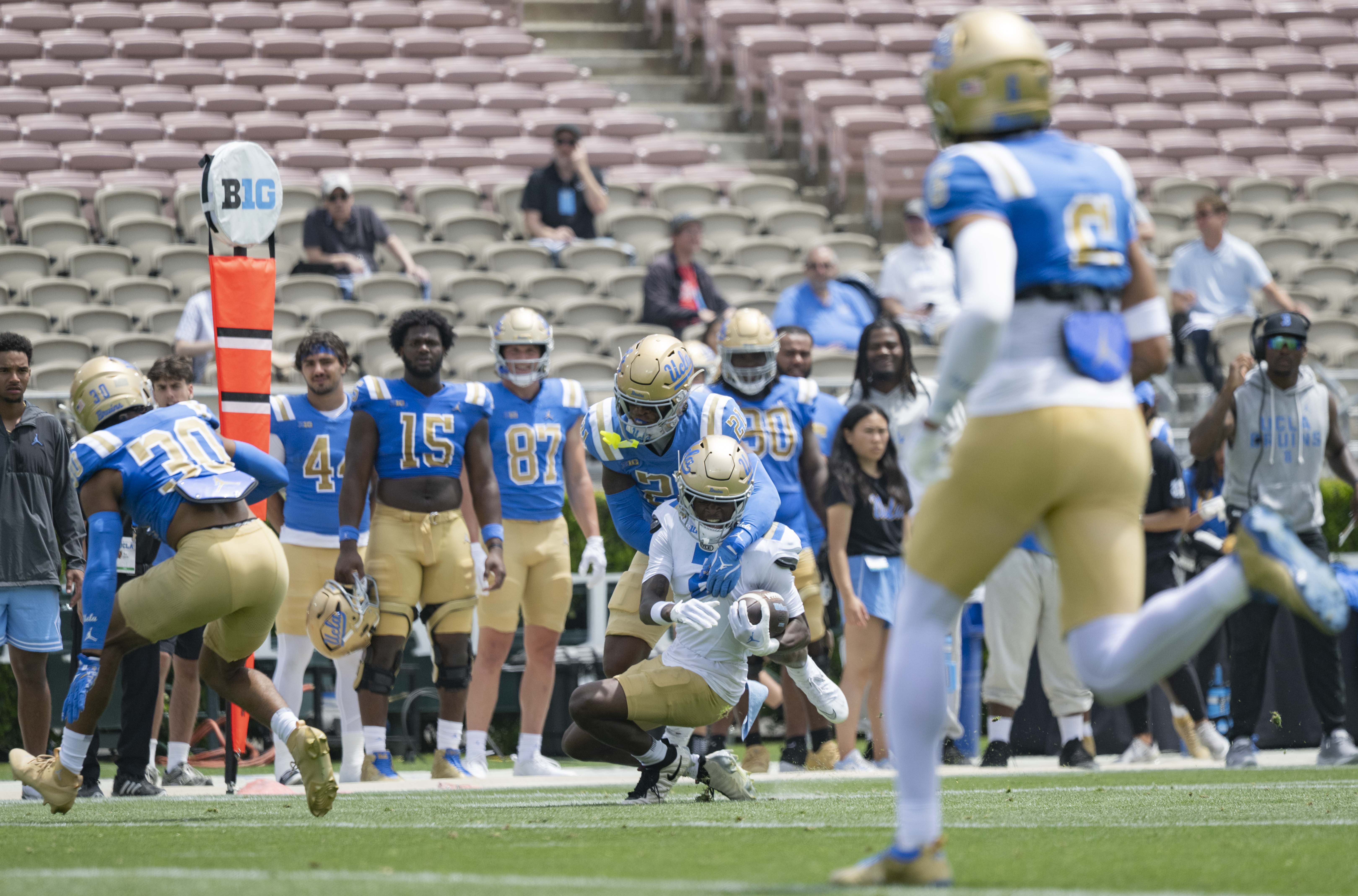
While the tackle spots leave a bit more to be desired, especially compared to the guards, the retooled unit – highlighted by fifth-year Hall Schmidt, who started all 12 of his games in 2024 for Boise State, when Heisman runner-up Ashton Jeanty ran for over 2,600 yards – should make for big improvements from last season.
But as much as the offense has improved, the defense may have grown even more.
New defensive coordinator Colin Hitschler rounds out the JMU-turned-UCLA trifecta of coaches after a campaign in which the Dukes ranked No. 5 in yards allowed per game and No. 6 in third-down defense, also producing the Sun Belt Defensive Player of the Year.
Similar to last season, expect Hitschler to run out a 4-2-5 coverage on most downs, employing a deep room of secondary players to quench opposing passing games. In 2025, Hitschler guided the Dukes to a conference-best 181.6 passing yards allowed per game.
Manning the nickel spot at the time was senior DJ Barksdale, who followed Hitschler to Westwood. The JMU transfer was a highlight at the top of most plays, possessing the ability to pull in to contest short throws and cover wideout threats, despite standing at just 5-foot-8. His defensive IQ translated to 36 tackles, 12 pass deflections and two interceptions last season and should continue to be deployed in a Hitschler scheme.
[Related: Film breakdown: UCLA football’s 4 new cornerbacks could prove to be a cornerstone for defense]
The Bruins also nabbed fifth-year safety Tao Johnson, who comes to Westwood after four years with Utah. Johnson totaled 154 tackles, 16 pass deflections and three interceptions – two of which occurred last season – with the Utes. He started all but one game in the 2025 campaign as a flexible, plug-and-play option whose extreme speed enabled him to excel in both man and zone coverages.
But it’s the continuity of UCLA’s secondary that makes it so appealing.
Jackson, Martin and senior Rodrick Pleasant are all set to return as key starters. In 2025, the three Bruins combined for 145 tackles, 13 pass deflections and three interceptions, with Pleasant accounting for seven of the deflections.
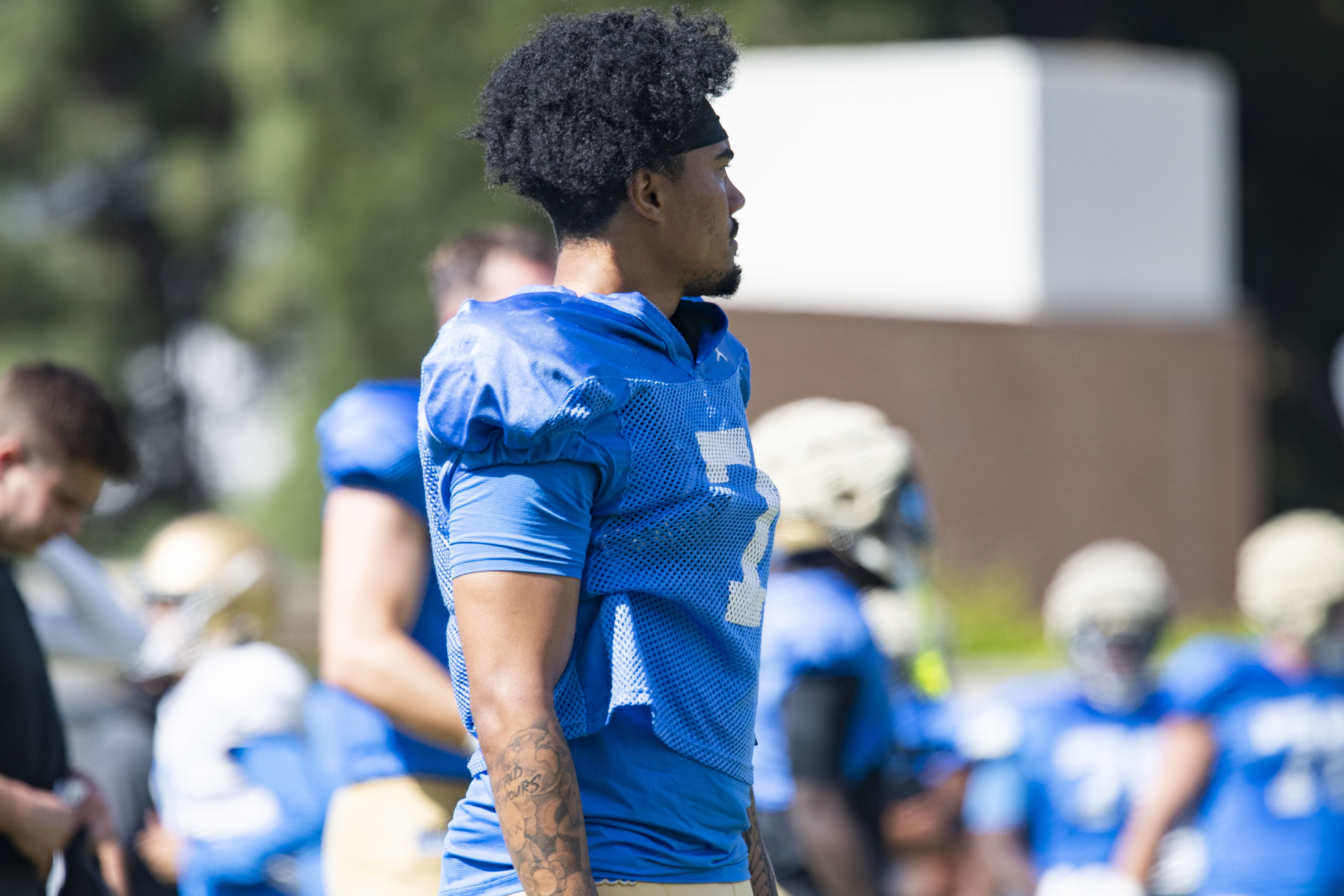
While the secondary is arguably UCLA’s best position group, Hitschler will likely often switch to a 4-3 defense to challenge stronger offenses in a conference where half the teams ran for 150-plus yards per game last season. Nonetheless, a deep linebacker room, mixed with key transfers and solid continuity, gives him options to play around with.
Headlining the linebackers is Sammy Omosigho, who has already been trusted as the vocal leader on defense. The Oklahoma transfer saw a more limited rotational role across three seasons with the Sooners, but his playoff experience bodes well for what I expect to be a huge breakout year for the senior.
[Related: Film Breakdown: UCLA football reloads linebacker unit with versatile transfers]
Omosigho – who will line up next to fifth-year Jalen Woods – should fit seamlessly into Hitschler’s game plan, boasting the lateral agility and positionality to play both the Mike and Will linebacker roles, while also being able to drop against quicker passing teams.
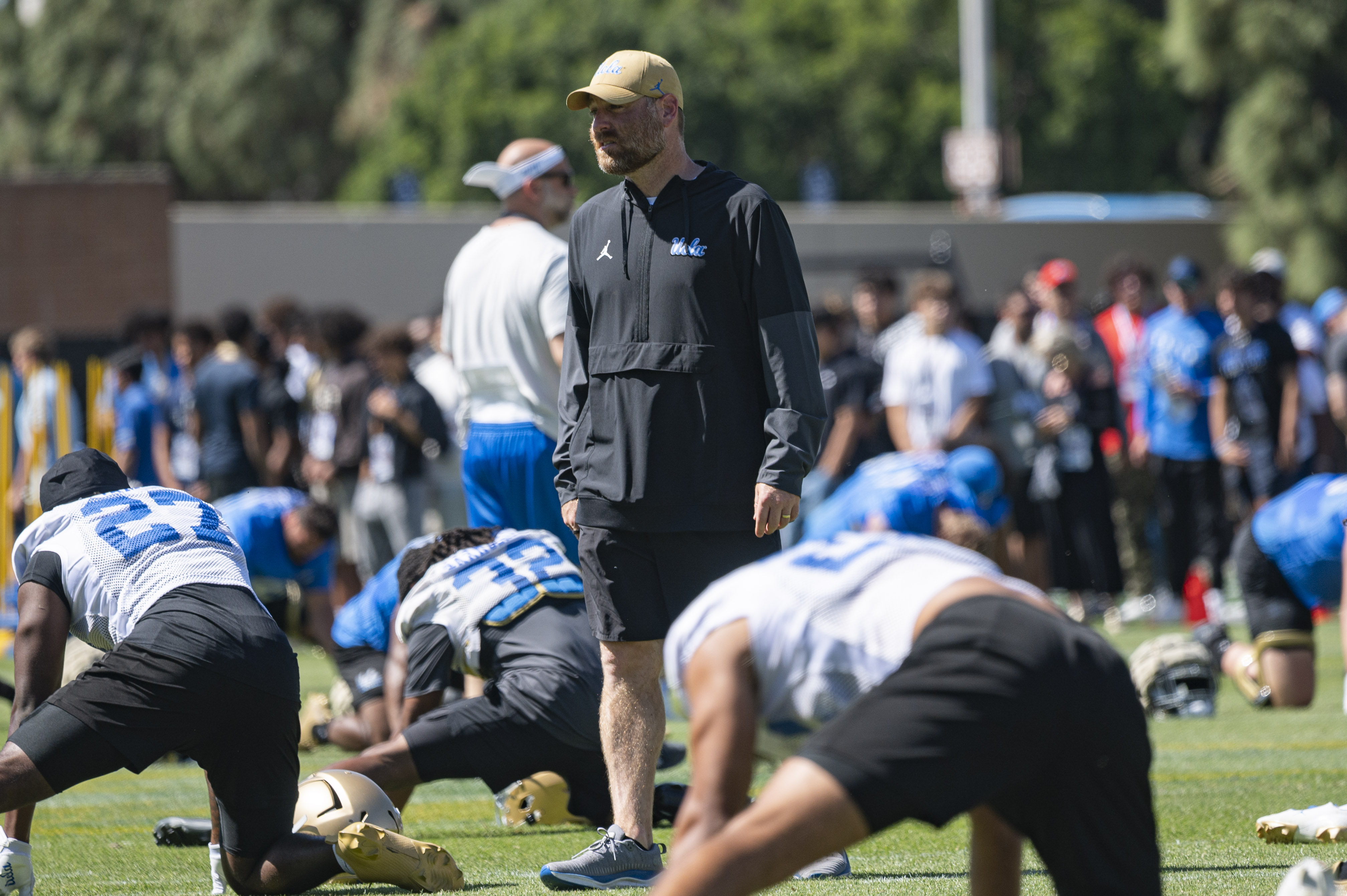
But the Bruins’ most exciting defensive name is 2025 Sun Belt Freshman of the Year Sahir West.
[Related: Film Breakdown: UCLA football fortifies its defensive line through transfer portal]
The JMU transfer’s seven sacks were tied for the second most among freshmen, and his exceptional potential and athleticism will allow him to man the entire front line, shed opposing blockers and bring in a newfound disruptive pressure on the edge UCLA hasn’t seen since now-Indianapolis Colts Laiatu Latu.
All things considered, the front seven is underrated, lined with large rushers who are a step up from last year’s squad, which was plagued by weak pressure and rarely forced quarterback scrambles.
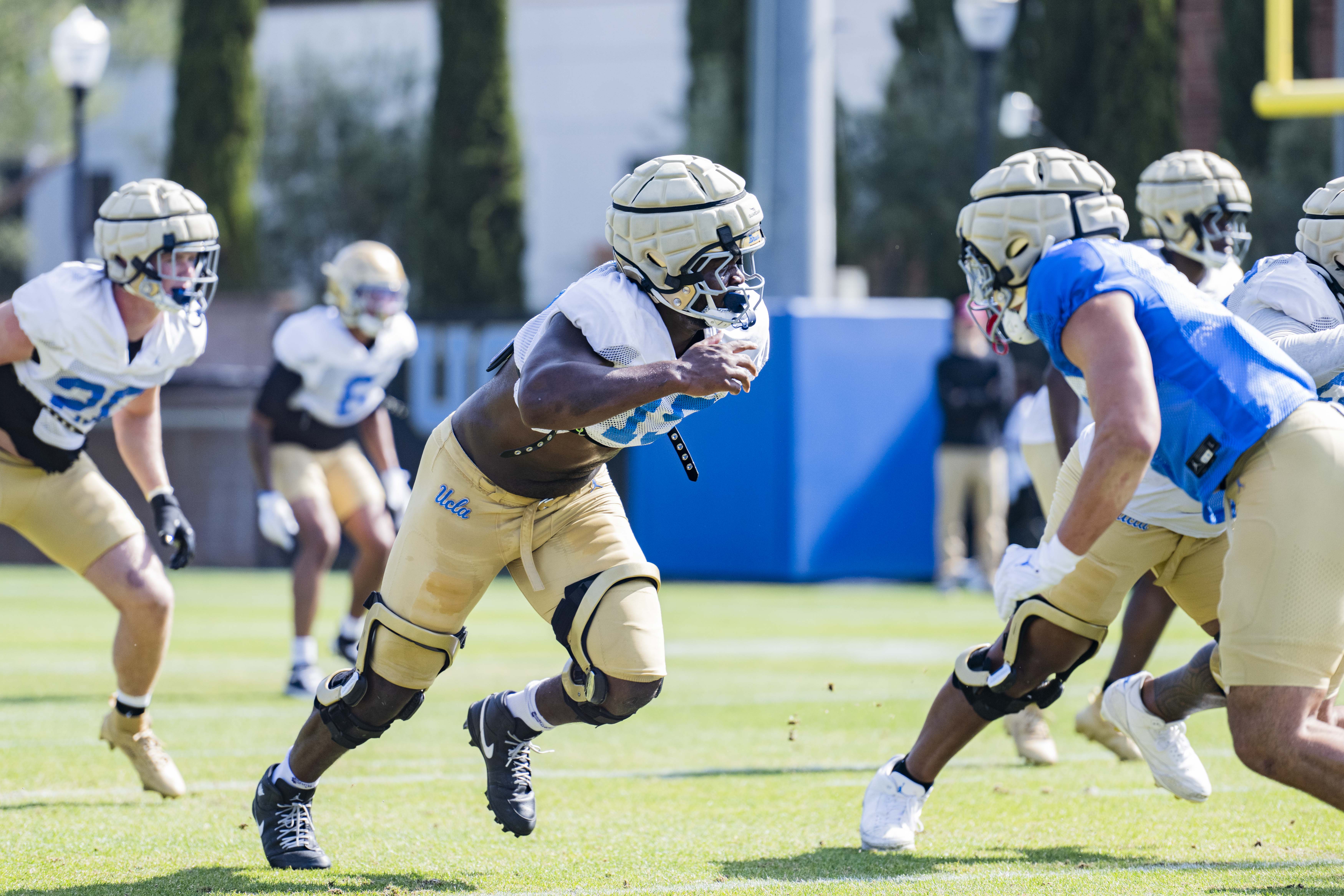
If there’s any aspect of the UCLA defense to be criticized, it’s the nose tackles, where Maxwell Roy and Tyson Ford project to start, both of whom are rather inexperienced. The former redshirted his freshman campaign at Ohio State, while the latter has appeared in only nine games across three years between Notre Dame and California.
In a heavy-hitting conference, UCLA will likely be forced to overload the line of scrimmage often, especially on third-and-shorts. Don’t be surprised when Hitschler taps into sophomore Scott Taylor and senior Donavyn Pellot for key snaps as hybrid rushers.
The Bruins allowed the 18th most rushing yards per game in the country and second-most in the Big Ten in 2025, so bringing in a guy like Hitschler – who captained the fifth-best rushing defense in the nation last year – is bound to elicit much optimism. However, only time will tell if the Chesney train did enough to address major bumps in its tracks.
So after all that, what should UCLA fans be anticipating?
Well, the parallels to Indiana might be a tad unrealistic, but it’s hard not to be excited.
In my heart, I’d be lying if I said there wasn’t at least a bowl game to be expected – it feels fair to say any other finish would be a disappointment.
The Bruins are set to have the sixth-easiest schedule in the Big Ten this upcoming season, avoiding big names like Indiana, Ohio State and Iowa. While UCLA opens with two nonconference opponents that both made bowl games last year, the Bruins have to take advantage early because an 0-2 start entering conference play would damage morale and seem eerily similar to how 2025 began.
[Related: Dully’s Drop: Analyzing, predicting outcomes of UCLA football’s 2026 schedule]
While a Week 5 visit to Oregon and two final matchups against Michigan and crosstown rival USC seem like three inevitable losses, it seems fair to say every other game is a toss-up.
I’m not going to say a 9-3 slate and CFP contention is a lock, but I wouldn’t call anyone crazy for expecting a winning record. Between an entirely new culture, well-established coaches and one of the most promising transfer classes in recent memory, Westwood is poised to reclaim some of the football fanaticism that has seemingly withered away over the last few years.
For now, it’s well worth it to buy a ticket onto the Chesney train.

Comments are closed.