This post was updated Aug. 30 at 7:05 p.m.
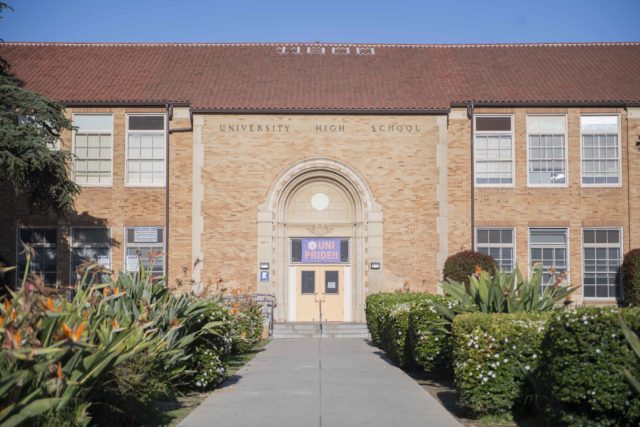
Los Angeles Unified School District’s former superintendent, Alberto Carvalho, resigned this June.
LAUSD is the second-largest public school district in the country, serving over 500,000 students. Carvalho resigned nearly four months after an FBI raid of his home and office in February 2026.
Following his resignation, an investigation ensued into a $6 million investment of district funds to AllHere, an AI company that developed the district’s chatbot.
AllHere collapsed in 2024 before the FBI raid of Carvalho’s office and home, and the company’s CEO was arrested for fraud. Carvalho has since been replaced by interim superintendent Andrés Chait.
Carvalho’s resignation must serve as a lesson: amid budget insecurities, all schools, including UCLA, must prioritize equity and student achievement rather than relying on the shiniest new education technology.
In a socioeconomically and culturally diverse city like Los Angeles, the needs of one community are not the same as the next. In LAUSD, three out of four schools consist of at least 80% low-income students.
It would make sense, then, for LAUSD to focus on equity and students’ academic needs. But the district plans to implement an 86% funding cut to the Black Student Achievement Plan in the 2027-28 school year, coupled with cuts to the Student Equity Needs Index, a $600 million budget that funds staff and resources at LA’s highest-need schools.
Fraudulent or not, Carvalho’s $6 million investment in the AI chatbot service was hardly a necessity.
LAUSD’s AI chatbot investment was intended to serve as a districtwide resource for answering day-to-day questions. But the AI investment veered into uncharted territory and came with no guarantee of serving students.
Justus Factoran, a rising second-year physiological science student, said that, as a former LAUSD student, he saw students engage with the district occasionally but believes they should play a more active role in decision-making. The $6 million could have instead provided basic necessities like school supplies and improved cafeteria lunches, he added.
It may be true that AI is the future and will make students harness valuable skills. But in a season of transition, officials must prioritize student success – not technological experimentation. Adrian Sutton, a rising third-year psychology student and former LAUSD student, said he believes educators should prioritize support for a diverse student body when allocating funding.
LAUSD is already experiencing operational concerns, said Susan Bush-Mecenas, an assistant professor of evaluation in education in the School of Education and Information Studies.
“They have a budget deficit,” Bush-Mecenas said. “They are facing this major investigation into the AI chatbot, and they have had a lot of issues with federal attacks on public education and some of the immigration enforcement actions that have occurred.”
The issue is not exclusive to LAUSD. Large public universities, like UCLA, have endured similar mismanagement.
UCLA’s Ascend Finance Transformation project cost more than $210 million and sought to modernize financial systems. But the systems have not been implemented, and the university even exceeded the projected budget.
[Related: ‘One timeline after the other was not met’ – UCLA’s $213 million project is failing]
Whether it’s LAUSD or UCLA, campus administrators should not approach public education like a corporation trying to optimize finances.
LAUSD’s AI misinvestment should usher in a reckoning for educational leaders about what truly serves students best.


Comments are closed.