This post was updated Aug. 31 at 12:16 a.m.
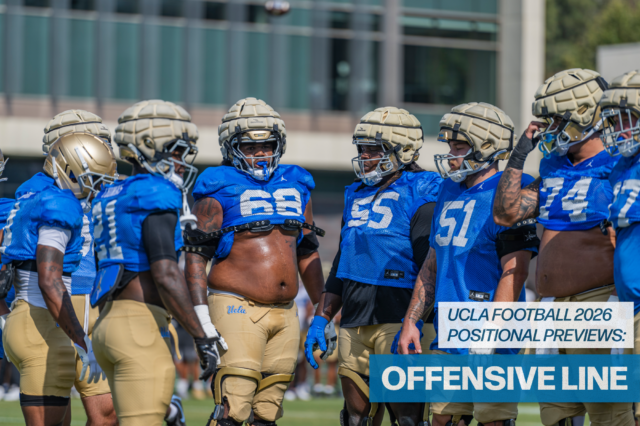
As UCLA football enters its first year under coach Bob Chesney and third season in the Big Ten, Daily Bruin Sports will preview the personnel of each of the Bruins’ position groups and predict their 2026 outlooks prior to the season’s official start Sept. 5 against California. Reporter Jack Clarke continues the series with a dive into the team’s offensive line.
Personnel
Few roles in sports require the level of cohesiveness, communication and camaraderie needed to succeed as an offensive line unit. Achieving this success becomes increasingly challenging playing in the run-heavy Big Ten, known for its bruising defensive fronts that consistently produce NFL talent.
The five Bruins tasked with anchoring the UCLA offensive line will be responsible for opening running lanes and protecting senior quarterback Nico Iamaleava in his second campaign in Westwood.
Relying on an infusion of transfer personnel rather than an established core of starters, new offensive line coach Chris Smith will have a depth of options for UCLA’s starting five in the trenches.
The Bruins’ offensive line allowed 27 sacks in 2025 – seven fewer than its third-highest Big Ten tally of 34 in 2024 – while averaging 139.7 yards per game on the ground. However, evaluating improvement of the unit against the backdrop of a 3-9 season can be inconclusive.
With 20 career starts under his belt, fifth-year center Sam Yoon represents one of two consistent starters returning to Westwood from the 2025 unit. The Pasadena local started in all 12 of UCLA’s contests last season and was tasked with anchoring the interior of the Bruins’ front five as the center.
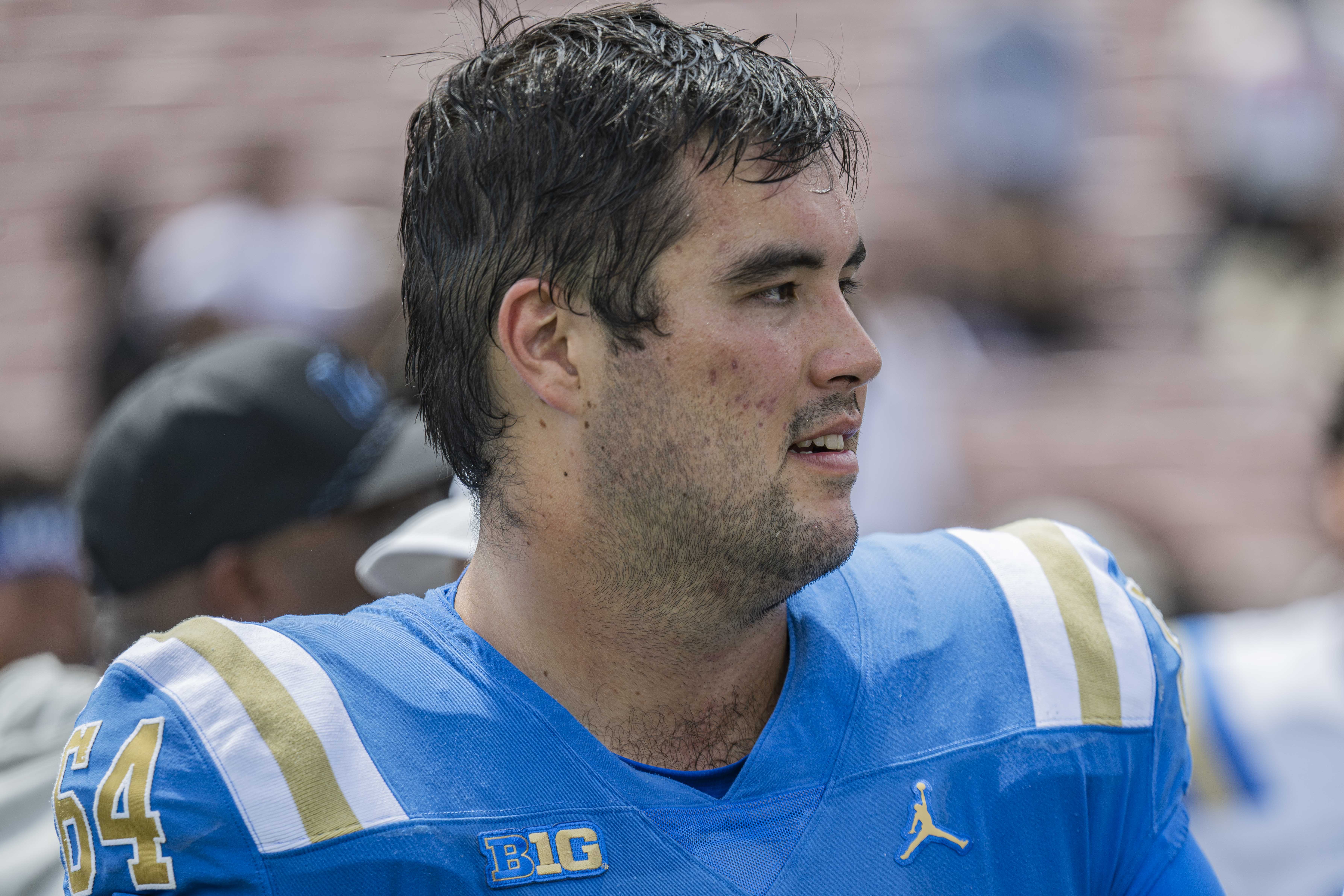
Representing another viable option on the interior of the offensive line, junior guard Eugene Brooks could also be in the mix to once again see significant game time in 2026. Brooks transferred to UCLA ahead of last year after a single season at Oklahoma, starting 11 games at left guard for the Bruins in 2025.
While Yoon and Brooks have Big Ten experience, Chesney also recruited two former James Madison starters to compete for playing time on the interior offensive line: senior Riley Robell and fifth-year Carter Sweazie.
Robell – an All-Sun Belt Second Team Selection in 2025 – started 11 games for the Dukes at guard. After Chesney’s departure, Robell announced his intention to transfer and committed to the Bruins as the transfer portal’s seventh-ranked interior offensive lineman, according to 247Sports.
Sweazie received All-Sun Belt Third Team honors in 2025. Starting at left guard in 23 career games at JMU, the Sterling, Virginia, local helped the Dukes’ offense average 37.1 points per game – the 11th-highest mark in the FBS.
Two other Bruins on the interior who could compete for game time include senior Sean Na’a, who appeared in 10 games for Arizona State in 2025, and fifth-year Julian Armella, who returns for the Bruins after appearing in 12 games playing both guard spots last season.
At tackle, a position that lacked viable depth in 2025, Smith will have multiple options for the offensive line’s two outside players.
A returning player poised to expand his role in 2026 is junior Jensen Somerville – who appeared in 12 games for the Bruins in 2025. Standing at 6-foot-8 and weighing 321 pounds, Somerville has the physical traits to be an effective tackle at the Big Ten level and should see increased usage this season.
The competition for tackle also features a group of five transfer players, all of whom possess notable game experience. Representing the highest-ranked tackle in the Bruins’ portal class, fifth-year Jordan Davis should be in the mix to see significant playing time in 2026.
Davis – who enters his sixth season in college football – comes to Westwood with 32 games under his belt. Spending the majority of his game time at South Alabama, Davis is a seasoned veteran who should be able to adjust to Big Ten competition.
But with Davis suffering a minor injury during training camp, the competition for tackle reps also features fifth-years Mack Indestad, Hall Schmidt and Derek Osman, who transferred from Eastern Michigan, Boise State and Harvard, respectively. Also returning from injury is fifth-year Jaylan Jeffers, who has appeared in 13 games for the Bruins across four seasons.
Predictions
UCLA’s significant coaching staff shifts over the past seasons have had a significant impact on the offensive line unit, with Smith representing the fourth leader of the offensive line room in as many years.
Coaching shifts paired with consistent player turnover in the transfer portal era means the composition of the Bruins’ offensive line will be significantly revamped when the team takes the field against the Golden Bears next month.
An intriguing dynamic is the competition for the three interior offensive line spots – with Robell, Yoon, Sweazie and Brooks emerging as frontrunners based on experience and scheme fit. However, with scheme familiarity in offensive coordinator Dean Kennedy’s system from JMU, the competition will likely favor former Dukes Robell and Sweazie to lock down starting spots.
Robell will most likely slide into the starting center spot, a role he occupied throughout preseason. However, Yoon could compete with Osman – who has recently taken first-team reps for the injured Robell – for reserve center reps throughout the season.
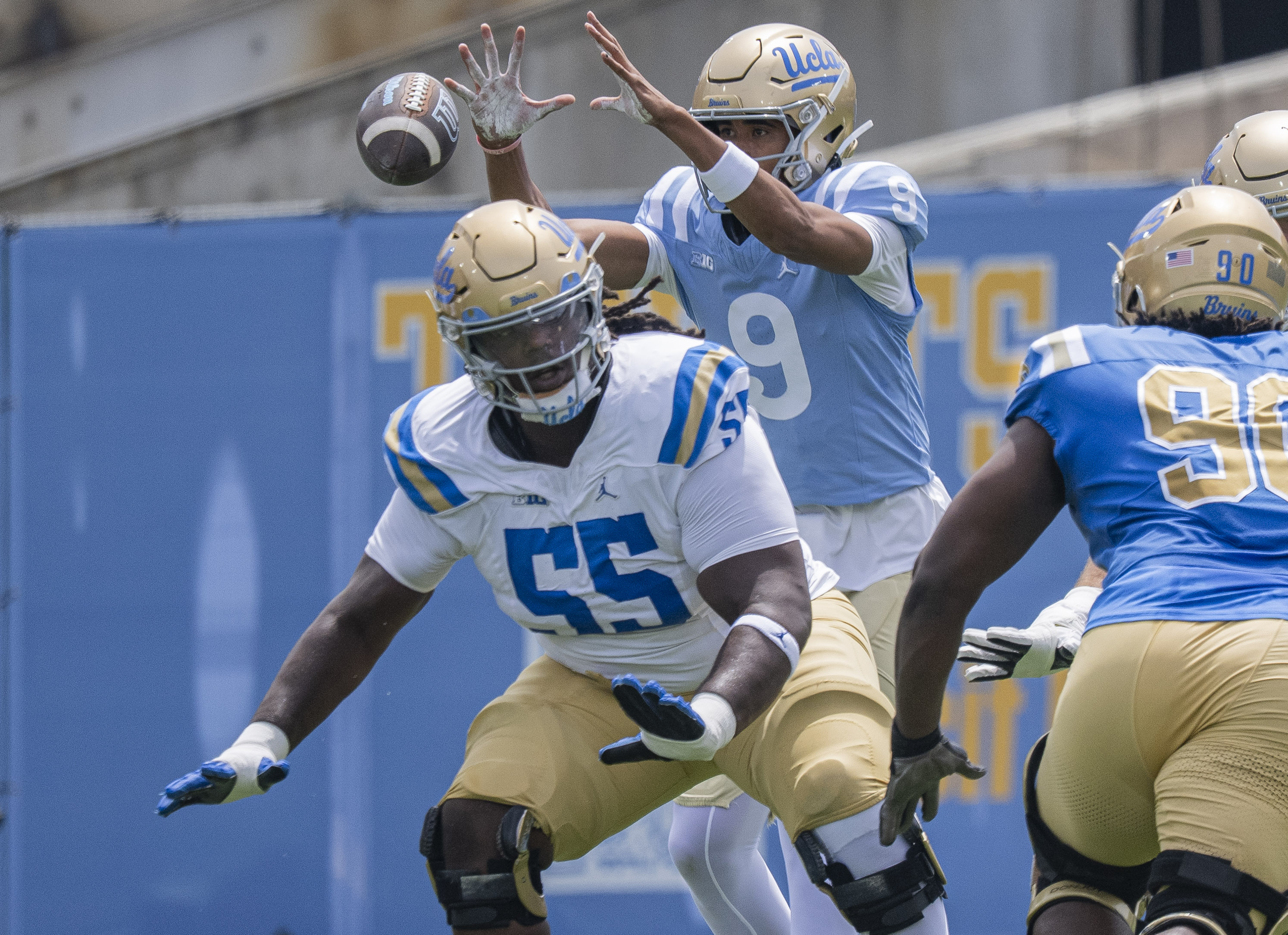
Sweazie is likely to occupy one of the guard positions alongside Brooks – who could take a big leap in 2026. With a 6-foot-3, 348-pound frame, Brooks is a bruising run blocker who will open lanes for Kennedy’s inside run concepts and occupy space in pass protection.
Moving outside, early reports from camp indicate that Somerville has taken first-team reps as Iamaleava’s blind side tackle, with Schmidt occupying the right tackle spot. A three-way competition between Davis, Somerville and Schmidt will likely continue to determine week one’s starting tackles.
A benefit the 2026 unit will enjoy when compared to last season is an abundance of depth, with multiple new and returning players able to slide into a variety of positions. The spirit of competition and surplus of capable linemen will ensure the Bruins send their best five players to the trenches every week.
Seeing Smith’s success in building an effective run-blocking and protection unit from JMU should make many members of the Bruin faithful optimistic that brighter days of offensive success are just around the corner. If starters and reserves constantly compete in practice for game time, the UCLA offensive line will be a cornerstone of a successful campaign in Westwood.

Comments are closed.