LOS ANGELES – Whatever’s clever? For Charlie Puth, it’s talking music with the next generation of music makers.
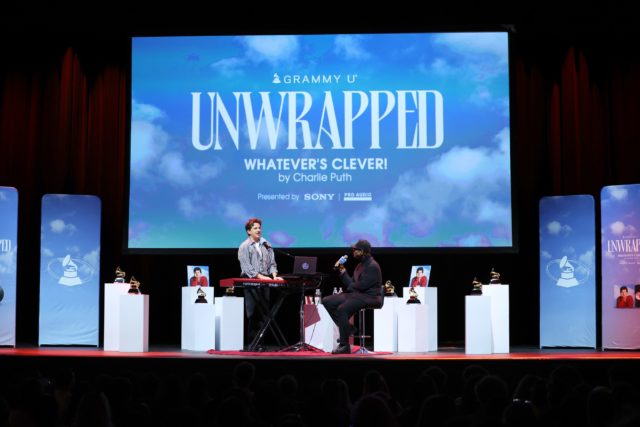
At Grammy U’s Unwrapped event with Charlie Puth, the “Attention” singer and producer-songwriter Jimmy Jam gave aspiring music professionals a behind-the-mix look at Puth’s career, creative process and latest album “Whatever’s Clever!”. The workshop-style event combined a track-by-track dissection of songs with studio stories from Puth and Jam and a member-submitted Q&A, held Wednesday at The Novo in Los Angeles. Moving beyond a retrospective look at his pop career, Puth employed real-time playback and isolated stems to guide a conversation linking each song’s sounds – from its instrumentation and arrangement to its sonic references – to the specific influences behind them.
“Having hits doesn’t necessarily mean success,” Puth said. “Success is what you make of it.”
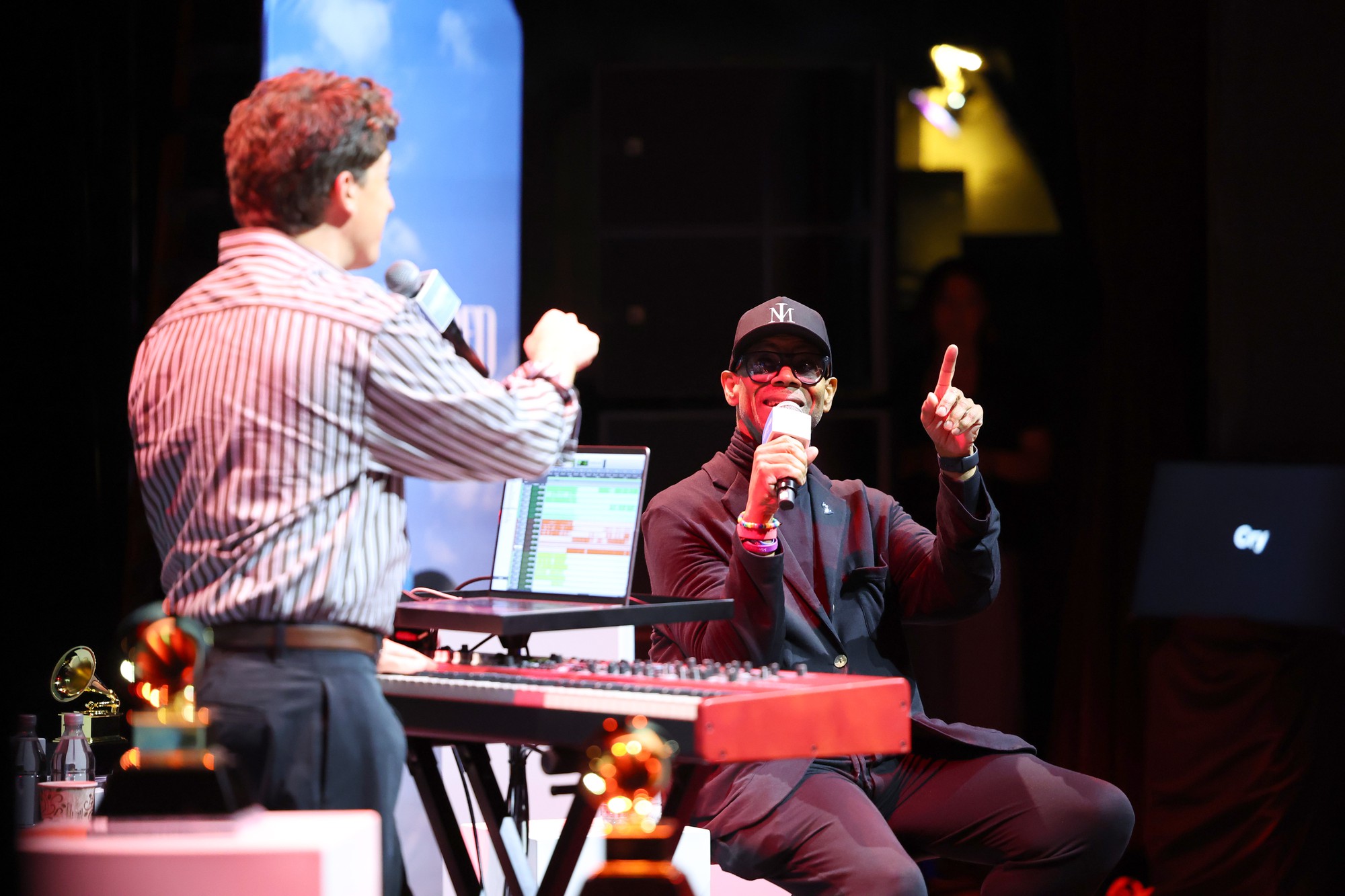
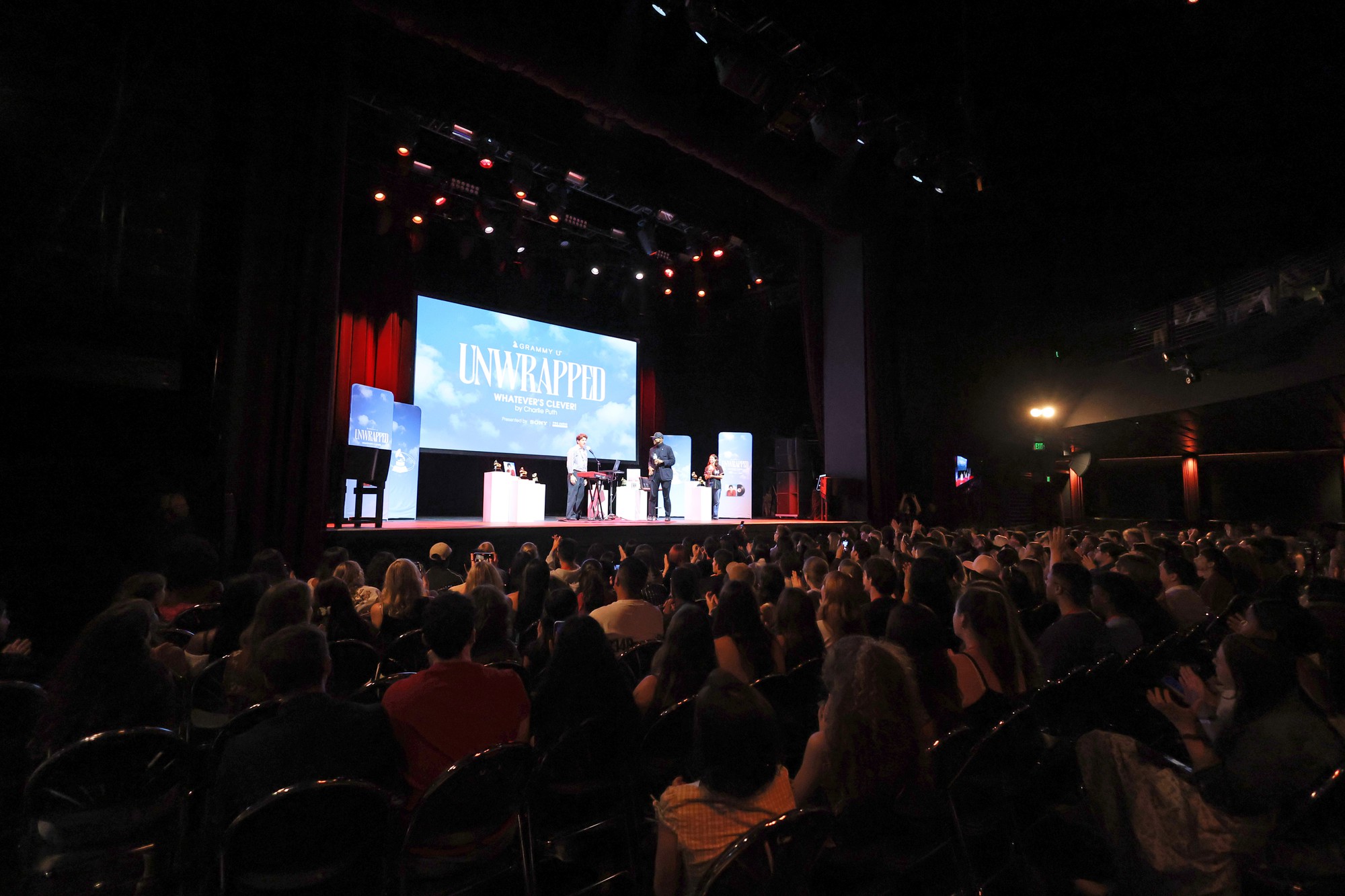
Between stories about collaborators and reflections on impromptu detours through his musical influences, Puth and Jam treated production as equal parts precision and instinct. Center stage at The Novo, surrounded by Grammy awards, Puth stood behind a Nord Stage 4 keyboard and laptop while Jam sat beside him. A projector magnified Puth’s session files for the several hundred attendees seated across the venue’s floor and balcony, transforming the theater into show-and-tell – part discussion circle, part live studio session.
[Related: Q&A: Santigold reflects on womanhood, genre-bending career ahead of Daisy Chain Fields]
Grammy U, the Recording Academy’s program for the next generation of music professionals, supplements classroom learning for students and young creatives, ages 18 to 29, with direct access to artists, mentors and networking opportunities.
For Zach Maurer, a producer who works under the name Mavry Music, the event’s level of access was part of the draw. He said one of the reasons he attended was to pick up strategies from someone who has built an enduring career in pop.
“You can be really good at what you do and still not get through the door,” Maurer said. “I’m looking for little secrets, little tricks that help you stay current, stay modern, stay ahead of the game.”
Brianna Le and Amity Wu, first-year music industry students at the University of Southern California, attended the event after hearing about it through a professor. Wu said she saw the Grammy U program as an opportunity to hear directly from an artist while connecting with peers and professionals in the industry.
“The industry is super small, so leaving a good impression – that matters the most,” Le said.
Anthony Ferrara, a video contractor who has worked in video production for about 15 years, oversaw a crew operating cameras that recorded Puth and Jam from multiple angles. He said his work – keeping cameras stable, powered and visually consistent – would turn the one-night discussion into a resource Grammy U can later share online. A former musician himself, Ferrara added that he transitioned to photography and videography after deciding he no longer wanted to perform in a band. The transition, he said, offered another way to remain part of the live music scene.
“People here come to get a pretty original view of someone that they like or have heard of before but also that opportunity to interact with them and ask them questions,” Ferrara said.
Onstage, Puth made the creative process tangible by pulling apart his songs in real time, muting and restoring individual tracks as he worked. He explained how he layered percussion, keyboards, guitars, bass and vocals to build to each song’s ultimate sound.
“There’s hidden melodies everywhere that don’t step on each other,” Puth said. “It’s the spice. It’s the seasoning.”
Jam said the details don’t need to be obvious to matter. Listeners may not hear every layer, he said, but they feel the emotional effect from those technical choices.
Puth credited co-producer BloodPop with teaching him when to stop chasing perfection, while Jam urged the room to look around at its own future creative partners.
“Know your neighbor. Know the people around you, because you have the whole ecosystem out here to make the greatest music that has ever been made amongst you right here tonight,” Jam said.
Sawyer Glenn, an intern at 4TH Street Recording, said Puth’s first song breakdown made the technical discussion feel immediate. For Ras Chanda, who also interns at 4TH Street Recording, watching Puth dismantle and rebuild his songs provided a new way to think about experimentation with his own sound, he said.
As Puth added kick drums and snare, Glenn said he felt the crowd’s energy rise alongside the arrangement. He added that the demonstration gave him a concrete next step for his own work: to layer it more deliberately. Chanda echoed this sentiment and said Puth’s approach encouraged him to combine sounds and instruments he may not have previously paired.
[Related: Album Review: Kasabian’s “ACT III” embraces dance but leaves rock identity questions unanswered]
Songwriter and artist Keilani Mai, who came to the event with her producer, Simon J. Li, credited Puth’s openness about his influences, collaborators and creative uncertainty for making his success feel more reachable.
One of Puth’s messages – make music you actually like – resonated with her in particular. Mai pointed to the pressure on artists to create songs for TikTok transitions to explain why that advice, to her, is so important.
“It’s so easy to put successful artists on pedestals,” Mai said. “But at the end of the day, they’re just people like the rest of us.”
In Mai’s view, Puth’s candor narrowed the space between audience and artist.
“I know sometimes it looks like the Grand Canyon between from where you’re sitting to him (Charlie Puth) on stage, but it’s only a few steps,” Jam said.
What started as a close-up lesson in vocal stacks, layering and production tricks eventually opened up into a wider conversation about the people and instincts behind the music. Beyond the mechanics of making a song, Puth and Jam encouraged young creatives to trust their own instincts, make room for other people and pursue work that feels personal before it feels marketable.
Puth’s showcase was one of many artist-focused events Grammy U hosts, trading a standard performance for an inside look at the decisions, doubts and collaborators behind the music.
“You just have to love what you do,” Puth said.




Comments are closed.