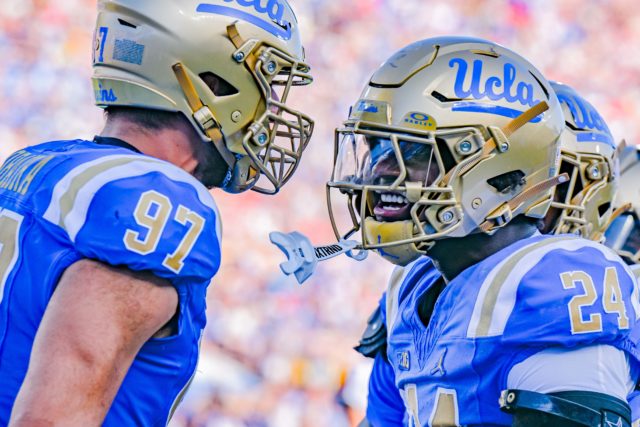
“Be quick, but don’t hurry.”
One of UCLA basketball coach John Wooden’s many legendary quotes advises patience and care amid the heat of the pursuit of excellence.
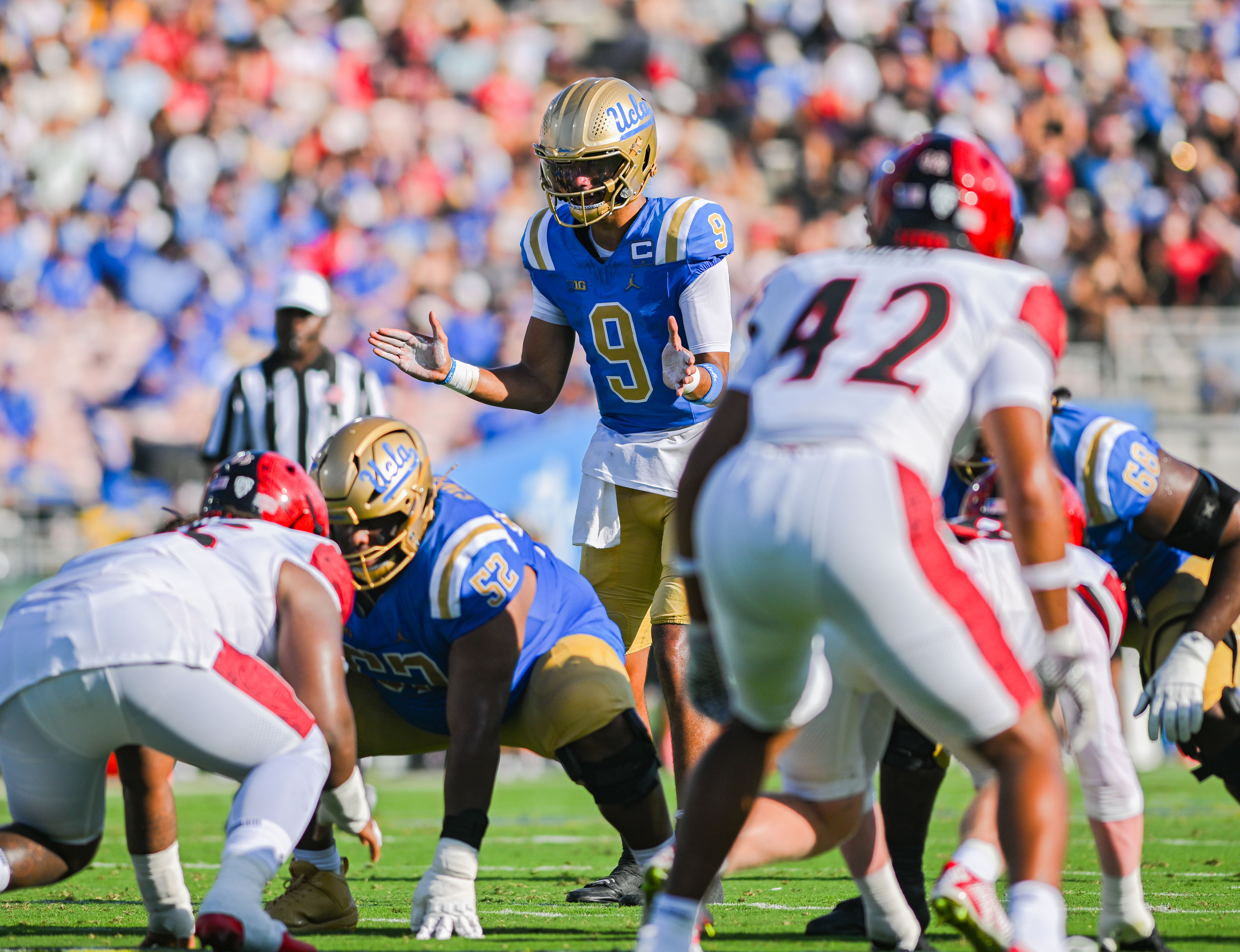
On the gridiron, UCLA football (2-0) will look to balance speed with patience and timing when opening Big Ten conference play against Purdue (1-1) on Saturday night at the Rose Bowl.
For the new Bruin coaching staff’s opening two acts, there has been little hesitation in identifying where UCLA has found consistent success within its attack. The Bruins have rushed for 491 total yards through two games, averaging 245.5 yards per contest and 6.5 yards per carry.
Even more impressive are the Bruins’ 10 rushing touchdowns – tied for first nationwide among FBS teams and already two more than they scored throughout the entirety of last season.
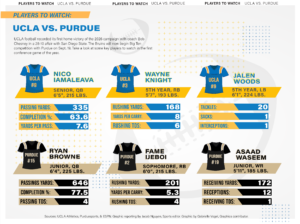
Most poignantly, the team-first mentality instilled by coach Bob Chesney has produced a running back room defined not by one workhorse, but by the collective success of its contributors. Across both contests, fifth-year Wayne Knight has led the charge with 168 yards and six touchdowns, while fifth-year Anthony Woods has added 148 yards and two scores and senior Jaivian Thomas has chipped in an additional 73 yards and a touchdown.
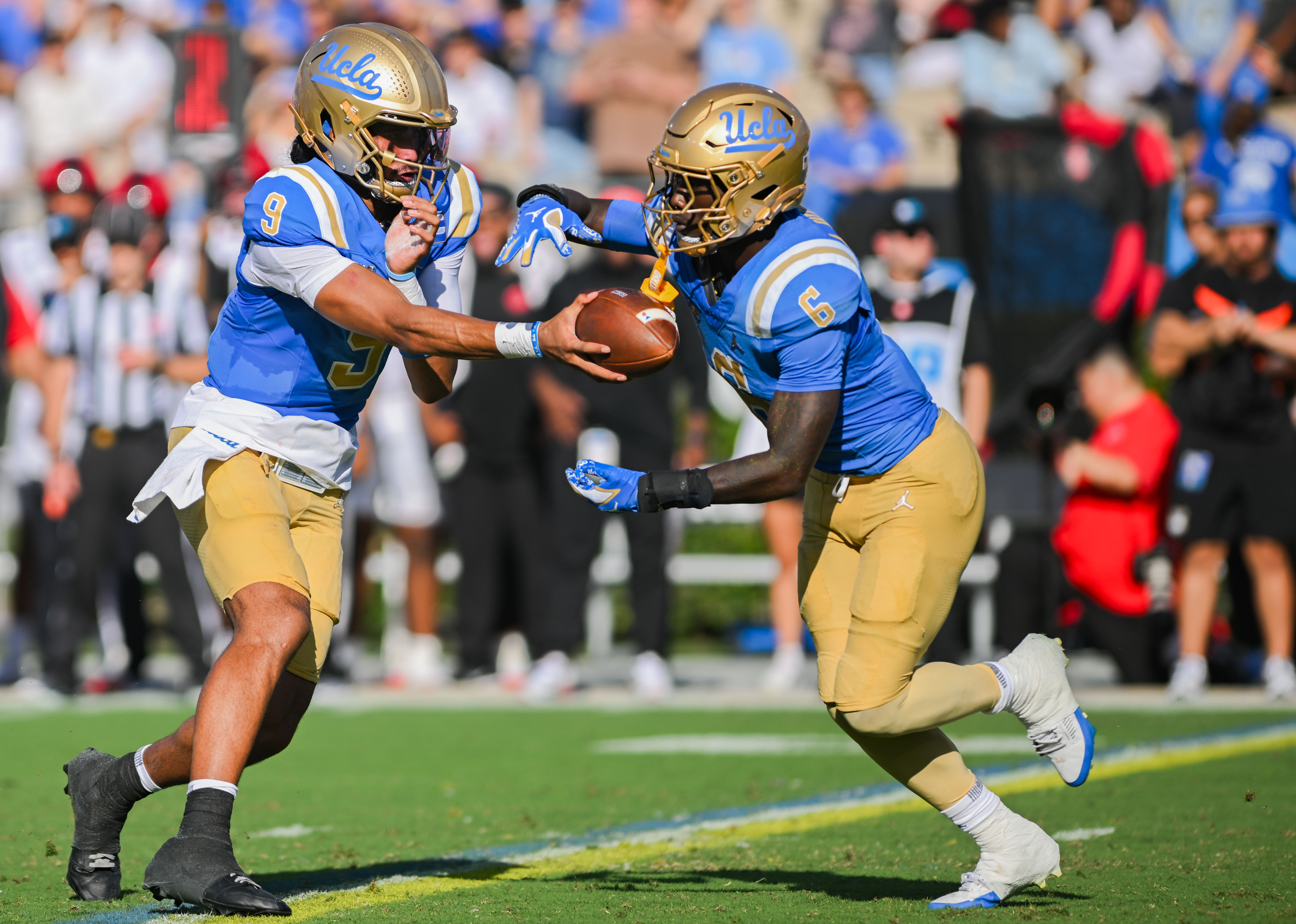
Behind an offensive line rotating as many as 10 potential starters, UCLA has constructed a ground game that is in the bottom half in attempts nationally yet top-20 in average yards per carry.
“The depth is helpful,” Chesney said. “Us being able to rotate some guys through allows us to keep some guys fresh in certain positions. Our adjusting and understanding of that game as it goes on, you prepare all week.”
And if the Bruins have already learned to be quick on the ground, their defense too has wasted little time establishing its own identity.
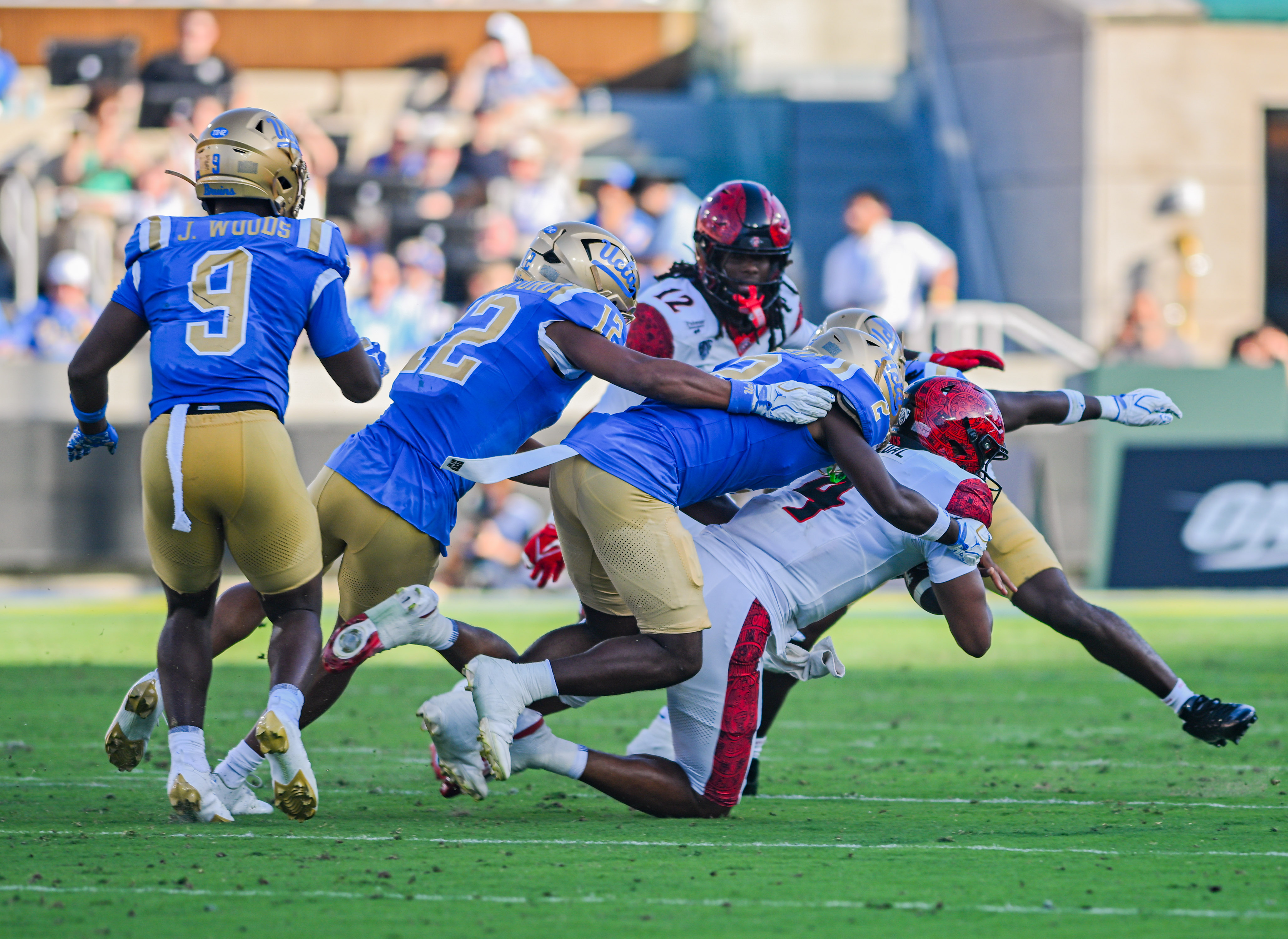
Tied 24-24 going into the fourth quarter on the road against California on Sept. 5, UCLA’s secondary forced two interceptions and held the Golden Bears to just 98 yards of offense and zero points in the final frame.
UCLA followed that up by suffocating San Diego State for much of their Rose Bowl opener the following Saturday. The Aztecs managed just 189 total yards and 45 through the air, the fewest passing yards UCLA has allowed in a game since 2017.
Through two games, opponents are averaging just 3.4 yards per carry, while the Bruins have accumulated five sacks and three interceptions. Nonetheless, UCLA’s coaching staff still sees room for improvement.
“We’re still not where we expect to be statistically or from a dominant standpoint,” said defensive coordinator Colin Hitschler on Wednesday. “And we left plays on the table in those games. That chip on your shoulder, that hunger … that’s what continues to grow, and that’s what’ll take us really far.”
However, while the Bruins have already demonstrated where they can be quick, avoiding the hurry remains a work in progress.
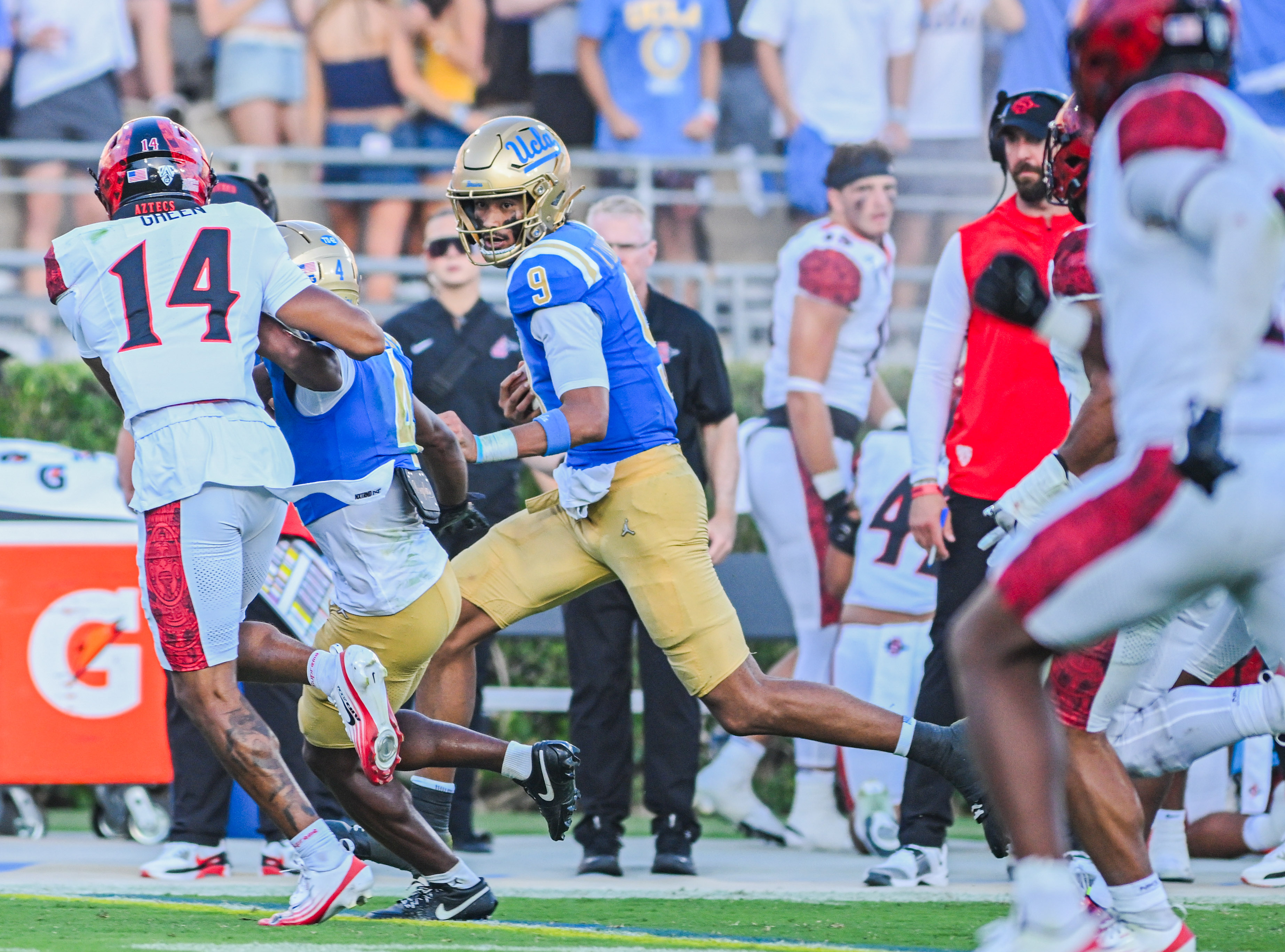
Senior quarterback Nico Iamaleava has thrown for 335 yards at a 63.6% completion rate, although he has yet to find the end zone and has thrown two interceptions. Both turnovers came in the red zone, including a poorly timed cross-body throw on third down against SDSU that ended one of UCLA’s better first-half scoring opportunities.
“There’s obviously a fine line, right?” said offensive coordinator Dean Kennedy on Wednesday. “His strengths are that he can throw the football. His strengths are that he also can run the football. “His ability of also understanding what is the coverage doing, when is it time to take off and go, … it’s our job as an offense within that to create explosives.”
While Iamaleava needs to progress in his decision-making, injuries plaguing the Bruins’ receiver room haven’t helped. Those include a head injury to senior Landon Ellis against Cal and a leg injury to sophomore Brian Rowe Jr. – who had already hauled in career bests of five receptions and 63 yards – against SDSU.
“There’s definitely going to be things that change as people go down,” Kennedy said. “It’s next-man-up mentality.”
Purdue may be just the team to provide Iamaleava time to settle in.
While the Boilermakers have been largely successful in containing traditional rushing attacks, mobile quarterbacks have been a more difficult nut to crack. Purdue held Indiana State and Wake Forest rushers to seven and 84 yards, respectively, in its first two contests.
However, Sycamore quarterback Elijah Owens and Demon Deacon quarterback Gio Lopez combined for 118 rushing yards and two touchdowns, both by Lopez, on the ground. The Boilermakers have generated 17 tackles for loss – placing them second in the Big Ten – but have struggled to contain quarterbacks in their pass rush scheme once the pocket collapses.
Rather than forcing UCLA’s passing game to immediately match the proficiency of its ground attack, Iamaleava’s mobility may grant him different avenues to becoming comfortable in the pocket and getting creative outside of it. Whether or not he can take advantage of those throw-on-the-run and option play opportunities will be crucial in the establishment of the Bruins’ aerial attack moving into the conference play.
Purdue quarterback Ryan Browne is entering the matchup having thrown for 646 yards at a 77.5% completion rate so far this season, leading the Boilermakers to an average of 40 points and 498 total yards per game.
On the ground, running back Fame Ijeboi has added 201 yards and four touchdowns so far, including 27 carries for 114 yards and three touchdowns last week.
And while free tickets and Love Island DJs might bring Bruin students out to the Rose Bowl, staying in their seats deep into the Los Angeles night could be a must if the game gets tight. UCLA has saved some of its best football for last, outscoring opponents 42-10 in the fourth quarter through two games and turning close contests at the half against both Cal and SDSU into double-digit victories.
Purdue has shown a similar refusal to go quietly, overcoming a 10-point deficit late against Wake Forest to force double overtime before ultimately falling by a designed-quarterback run two-point conversion.
“Be quick, but don’t hurry.”
If UCLA can put that patience and speed into practice, the team could find itself staying among the ranks of the unbeaten.
Comments are closed.