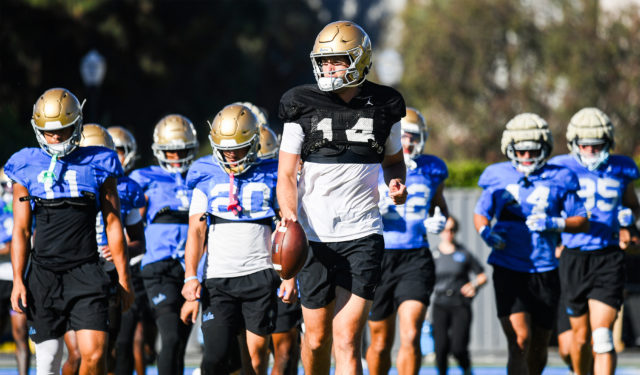
The blue and gold are undefeated through five games and are ranked the highest they have been in four seasons.
There is no protocol. There is no precedent – outside of the 14 other times the program has started 5-0. There is no Easter Bunny, there is no Tooth Fairy and there is no queen of England.
But this weekend at the Rose Bowl, there is a football game.
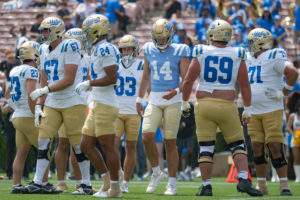
No. 12 UCLA (5-0, 3-0 Big Ten) welcomes Wisconsin (4-1, 2-0) to Pasadena Saturday afternoon for a classic-turned-powerhouse matchup between the current No. 2 and No. 4 teams in the Big Ten standings. The Bruins return to the Arroyo Seco for their third home game of the year – their first with classes in session – following a 17-15 upset of then-No. 13 Oregon. Meanwhile, the Badgers arrive riding a four-game winning streak after a 31-3 trouncing of Michigan State in Madison on Saturday.
Both victories have launched their respective programs into the recently unfamiliar territory of national recognition and even playoff conversations. And while these two teams are no strangers to high-octane matchups – each of their last three meetings has come in a bowl game – Saturday’s Badger-Bruin battle could eventually stand alongside the 1994 Rose Bowl in significance, should either program hear its name called by the College Football Playoff selection committee later this year.
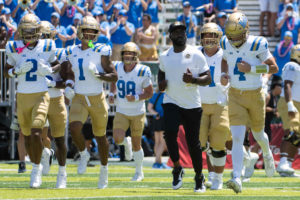
“Burn the boats” – as explained by coach Bob Chesney before UCLA’s first win in Eugene in 22 years – means leaving no doubt in one’s abilities and pushing toward new territory with complete confidence and commitment. First-year head honcho Chesney has done just that in his first five games, taking 55 new players and 19 new coaches and emphasizing the pillars of accountability, versatility and competitiveness in every form.
“We can’t try to be something different,” Chesney said. “Everything just keeps coming back to the work, the standards they set, the process they use every single week, and the accountability that they hold each other to.”
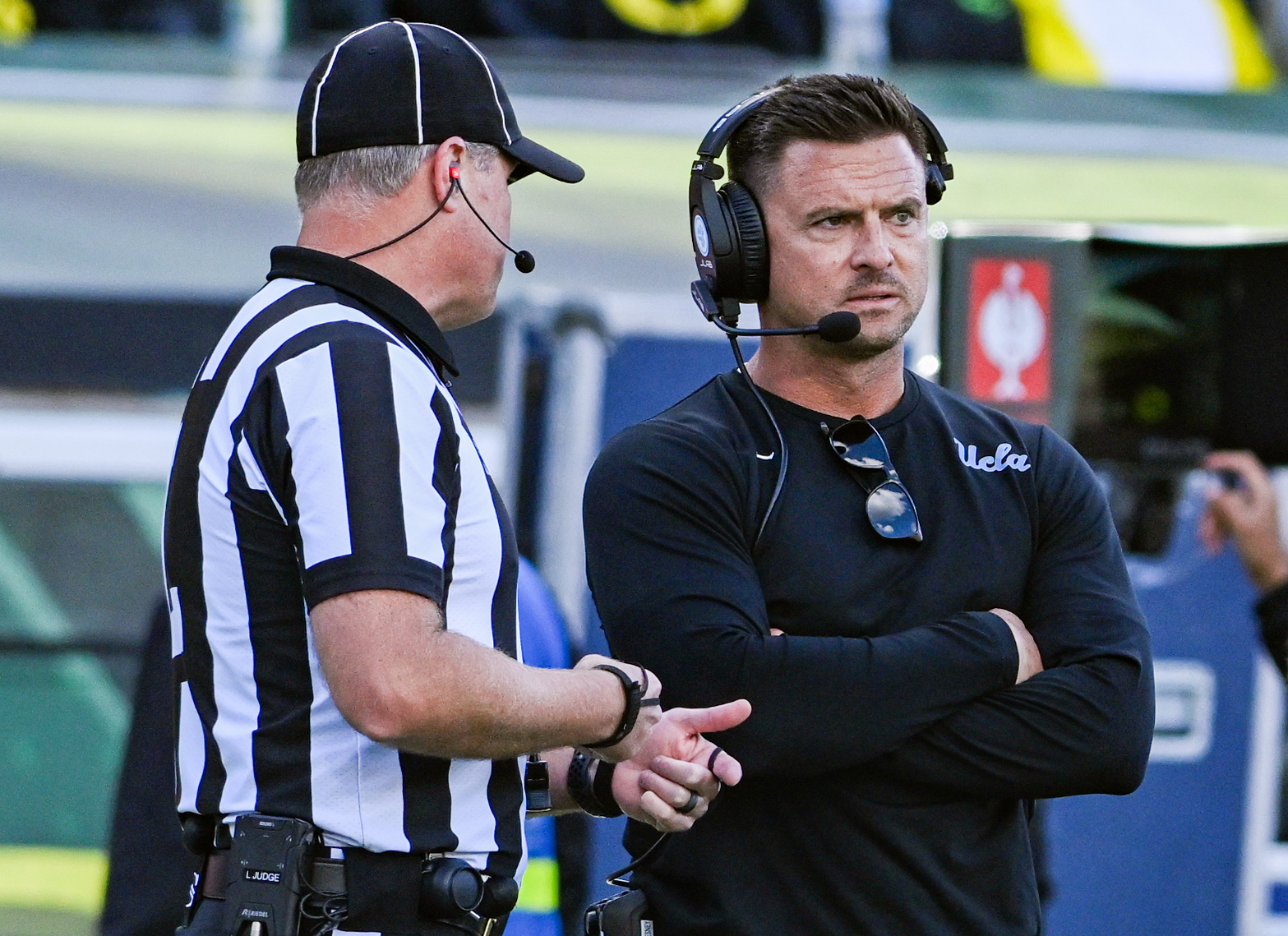
The Bruins rank among the nation’s top 25 in both rushing offense and defense, boasting the sixth-best rushing attack in the country with an average of 253.2 yards per game, and lead the nation with 19 defensive takeaways – all of which have helped Chesney become the first head coach in program history to start 5-0.
But standing across the field Saturday will be another coach who knows a thing or two about transforming a football program.
Wisconsin coach Luke Fickell is arguably the original engineer of the Group of Five playoff turnaround, taking the Cincinnati Bearcats from 4-8 in 2017 to the College Football Playoffs in 2021 before moving to Madison late in the following season. Now in his fourth full year with the Badgers, Fickell finally appears to have found the identity of dominance the Wisconsin faithful expected when he arrived in 2022.
After opening the season with a 41-13 loss to No. 2 Notre Dame, Wisconsin has responded with four consecutive victories, outscoring opponents by over 100 combined points, including a comeback win at Penn State on Sept. 26.
And while Chesney and Fickell have both built their success around physicality, discipline and confidence in the locker room, their teams have hardly followed the same blueprint to reach this point.
The Badgers have averaged 31.6 points per contest behind an offensive line that has surrendered just three sacks all season, backed by a defense allowing only 16.6 points and 267.2 yards per game, the 14th-lowest in the country. Leading the charge offensively has been quarterback Colton Joseph, who has amassed 1,132 passing yards and 10 touchdowns while adding another 262 yards and three scores on the ground. Joseph has found reliable weapons in receiver Tyrell Henry and tight end Jacob Harris, who have combined for 577 receiving yards and four touchdowns, while the Badgers’ defense has limited opponents to just 4.1 yards per play.
Wisconsin’s success is anchored in its defensive back room. The Badgers enter Saturday boasting one of the nation’s most efficient pass defenses, ranked eighth nationally in total passing yards allowed, holding opposing quarterbacks to just 152.6 yards per game and having as many interceptions on the season as passing touchdowns allowed, with three.
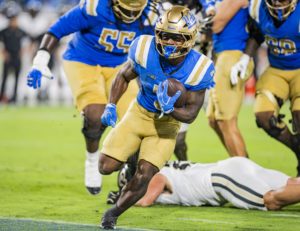
Unfortunately for the Badgers, however, is that they face a team that has spent the opening five games excelling at just about everything besides throwing the rock downfield. UCLA has developed one of the nation’s most lethal and unconventional rushing attacks, with offensive coordinator Dean Kennedy finding increasingly creative ways to move the football without relying on traditional passing concepts. The running back room of fifth-years Wayne Knight and Anthony Woods, alongside senior Jaivian Thomas, has allowed Kennedy to consistently find mismatches through personnel versatility, pre-snap movement and an array of wildcat concepts. All of that has been done behind an offensive line that made the Joe Moore Award Midseason Honor Roll for its play.
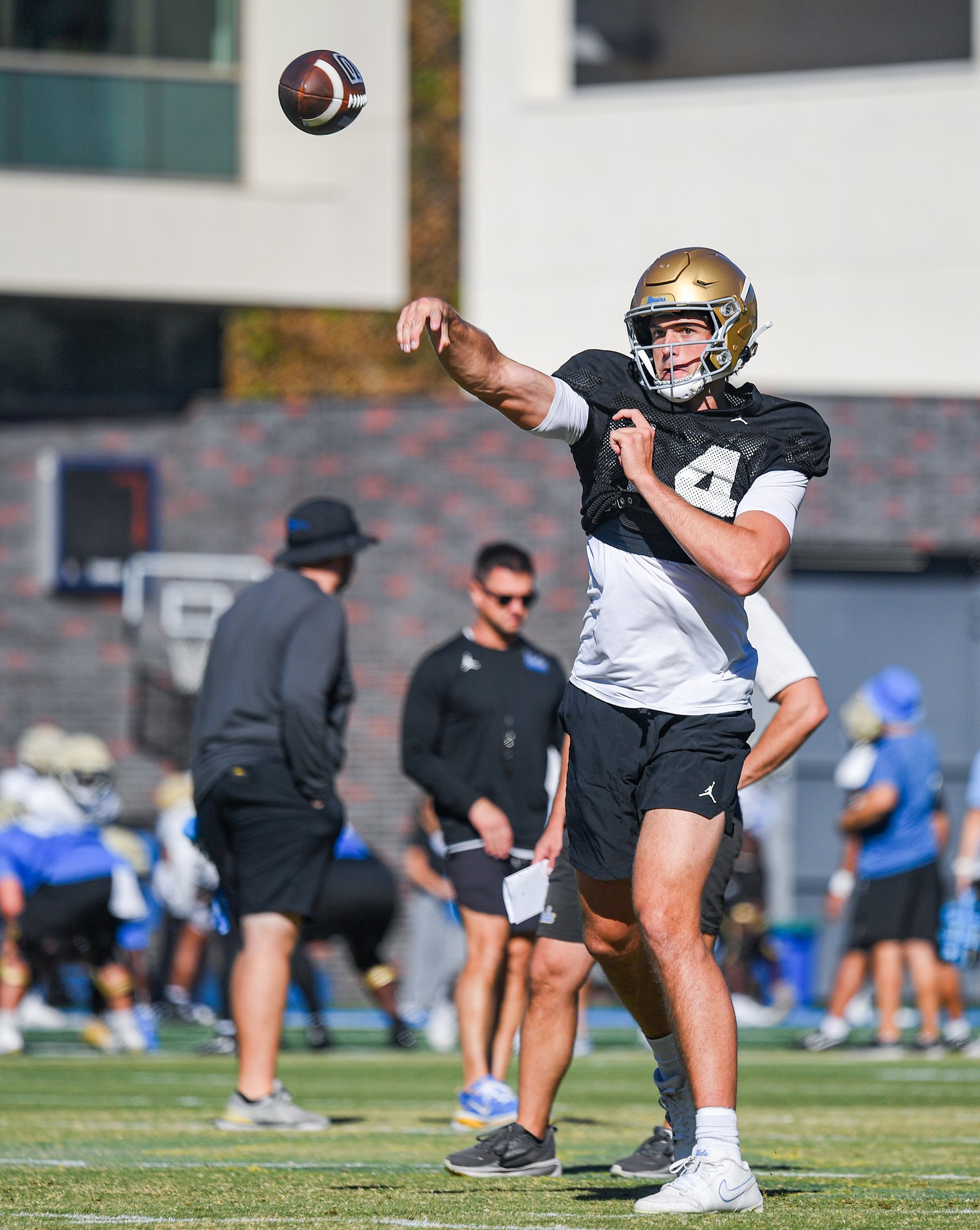
Still, with starting senior quarterback Nico Iamaleava’s injury at Oregon likely ending his season, senior quarterback and Cal Poly SLO transfer Ty Dieffenbach and the rest of the Bruin offense face an intriguing question: How much does losing Iamaleava change an offense?
Against the Ducks, the answer was not much. Before Iamaleava’s departure, the Bruins struggled to translate their offensive production into scores, completing 10 of 17 passes for 162 yards – averaging 9.5 yards per attempt – but managing just 10 points and totaling two interceptions.
Dieffenbach’s arrival near halftime brought that passing average down to 7.2 yards per attempt, but Knight’s 103 rushing yards and Woods’ and Thomas’ command of Kennedy’s offense kept the Ducks’ defense on their back heels, culminating in a touchdown pass from Dieffenbach to Knight.
The Bruins’ offensive versatility allowed them to survive the loss of their starting quarterback, but it was their defense that sealed the game. Against one of the nation’s best offenses, UCLA’s defensive front and linebacker corps repeatedly found ways to keep Oregon from finding its rhythm – and, even when pressured, made crucial stops, including a late-game two-point conversion stuff that preserved the Bruin lead.
“Some things might change, right?” Kennedy said. “Our identity of how we play the game – that can’t change, and that’s not going to change. Now you have an opportunity to step up, but really, at the end of the day, the preparation and what you did should all be consistent.”
Although Saturday’s matchup may present an unfamiliar challenge for UCLA’s new quarterback, the man orchestrating the Bruins’ defense will be facing a familiar opponent.
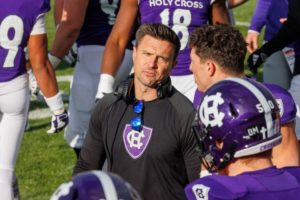
For defensive coordinator Colin Hitschler, Saturday’s contest is more than another opportunity to extend UCLA’s undefeated start – it’s a reunion with the man who helped shape his coaching career.
Before arriving in Westwood, Hitschler spent six seasons working under Fickell at Cincinnati and Wisconsin as a senior defensive analyst and eventually co-defensive coordinator, leading a secondary that produced future NFL superstar defensive backs like Coby Bryant and Sauce Gardner during the Bearcats’ most dominant era in modern program history.
“When you’re with somebody that long and had those experiences and what he helped me develop and become as a coach – I owe a ton,” Hitschler said. “Can’t say enough about him and his successes and why they’re successful.”
Now, with the two coaches standing on opposite sidelines, Hitschler takes a defense that has held opponents to just 4.6 yards per play and 87.6 rushing yards per game to face off against an offense who have been extremely proficient at being physical on the line of scrimmage and establishing their rhythm early.
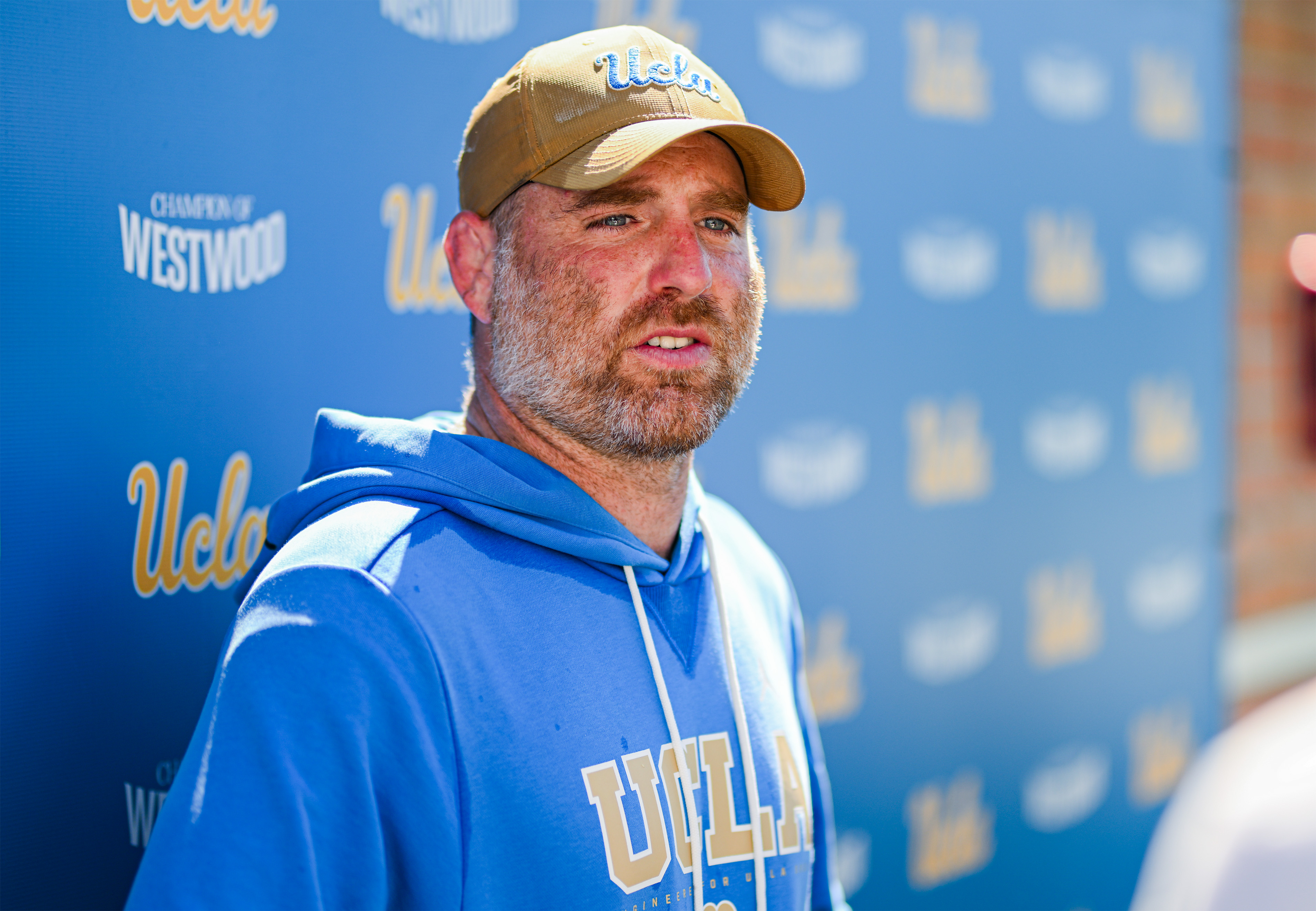
addresses the media. Hitschler was part of Wisconsin coach Luke Fickell’s staff for six seasons. (Kai Dizon/Assistant Photo editor)
The last time the Badgers met the Bruins in Pasadena was in 1999, when a dominant rushing performance from Ron Dayne pushed Wisconsin into a 38-31 victory against a national championship-contending UCLA program. However, this time, it’s the Bruins’ turn to make a statement and continue establishing not just the Rose Bowl as a blue-and-gold fortress but their presence as a serious contender for the college football playoff.
“I can’t wait to see it if it is packed and this city really gets behind it, because it’s a special environment regardless,” Hitschler said. “But when you get the fans behind it, it’s really fun.”
The last time the Badgers came to Pasadena, they left with roses.
This time around, however, Chesney and Co. have the opportunity to send them home with nothing but the sound of “The Mighty Bruins” ringing in their ears.

Comments are closed.