This post was updated Nov. 11 at 11:33 p.m.
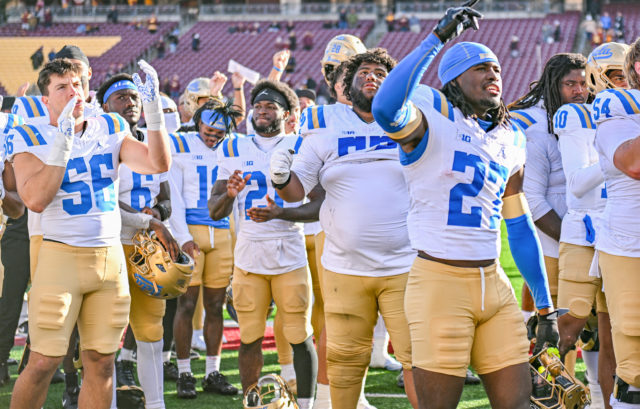
No. 4 UCLA football (9-0, 6-0 Big Ten) bested Minnesota (5-4, 3-3) 34-20 at Huntington Bank Stadium in Minneapolis on Saturday afternoon. The win vaulted the Bruins to a perfect 9-0 record, their first since 1998. Assistant Sports editor Willa Campion gives five takeaways from the game, which set UCLA up to earn its first top-five College Football Playoff ranking.
Dieffenbach and Mizell
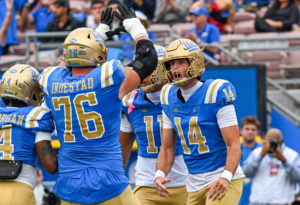
If there was one play that defined Saturday’s game, it was senior quarterback Ty Dieffenbach’s step-back bomb to senior wide receiver Aidan Mizell for a 75-yard touchdown.
Just minutes earlier, the Bruins and the Golden Gophers had been tied 17-17. But with a decisive one-play offensive drive, chances of an upset all of a sudden felt a lot slimmer.
To make sure fans remembered the moment, Dieffenbach and Mizell recreated it down to the yardage on the next drive.
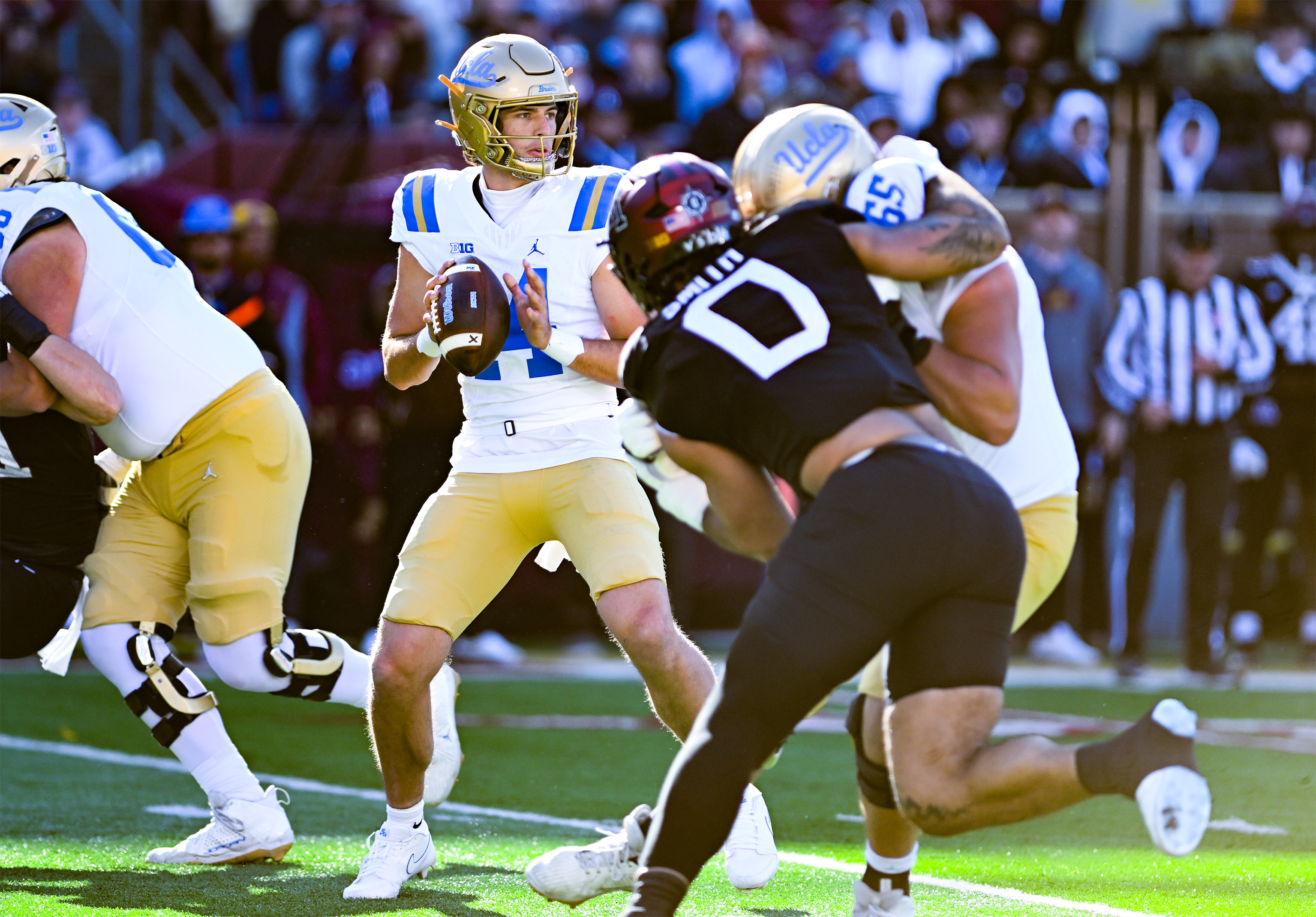
Both times, it was the opening play of a Bruin drive responding to a Golden Gopher score. And both times, a speedy Mizell left any sort of defense – albeit with some noticeable holes in the secondary – in the dust.
Saturday marked the fourth full game that Dieffenbach has played since he took over as signal caller for senior Nico Iamaleava, who suffered an injury mid-game versus Oregon on Oct. 10.
Across that span, Dieffenbach has accumulated 986 passing yards on 116 attempts, four more than Iamaleava picked up on the same number of attempts in the opening half of the season.
UCLA’s underdog story, going from a consistently bowl-ineligible team lacking a head coach to a national championship contender, has brought more eyes on Westwood. But Dieffenbach’s own underdog story might be even more attention-worthy, considering that in his first season at the FBS level – having transferred from Cal Poly SLO – he has gone from backup quarterback to the helm of one of the nation’s top five teams.
Who knew that San Luis Obispo, the hometown of Heisman contender and Miami quarterback Darian Mensah, could produce so much football talent? And the nation will certainly see more of that talent as the countdown to the College Football Playoff begins, with UCLA taking the No. 4 spot in the second iteration of the rankings and Miami close behind at No. 7.
Offensive line resilience
Saturday’s game could have taken a different turn when, in the second quarter, senior center Riley Robell went down with an injury to his lower left leg.
The star of UCLA’s offensive line has arguably been the key to the team’s success. Under Robell – who has started every game this season – the Bruins’ front five have provided the run and pass protection needed for their team to accumulate 431.9 yards per game, the second-most in the Big Ten behind only Ohio State.
So when Robell was escorted off the field at Huntington Bank Stadium in the first half, whether or not Dieffenbach would still have the comfort he had previously been allowed hung in limbo, especially against a Minnesota defense known for blitzing.
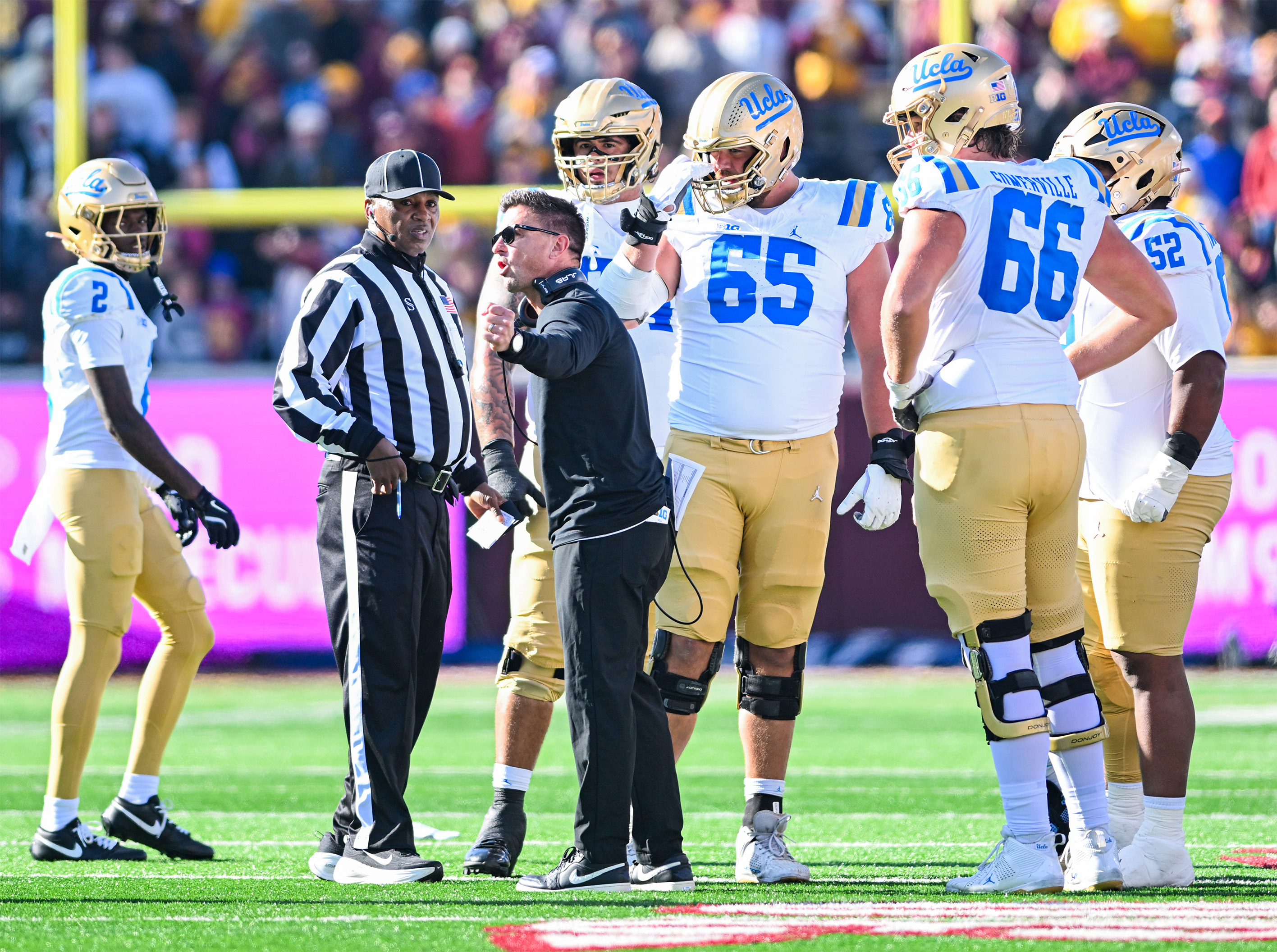
But the Bruins’ offensive line adjusted, and it was fifth-year offensive lineman Derek Osman – a Harvard transfer in his first season in Westwood – who stepped in at center. Given that Dieffenbach threw this longest completion of the season twice, Osman certainly effectively filled in for Robell, who has been ruled questionable ahead of Friday’s game versus Illinois.
The ability of offensive line coach Chris Smith – who has been with head coach Bob Chesney for eight of the past nine seasons across three different schools – to adjust to the unexpected was imperative to UCLA’s win.
The Bruins have proved they can hold their own in the trenches, especially against Big Ten teams that are often headlined by defensive line talent. Whether it is Osman or Robell starting at center moving forward, UCLA is in good hands.
Special teams
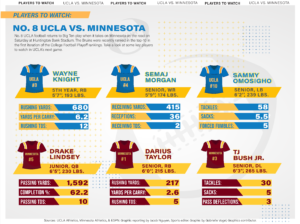
Reserve running backs usually don’t get much press, especially on a team that boasts Big Ten leading rusher Wayne Knight.
But senior Troy Leigber has certainly made a case for why he should.
On UCLA’s Sept. 26 outing to Maryland, his 83 rushing yards – including a 63-yard run – for one touchdown made a splash. He showed up again on the box score against Michigan State on Oct. 24, when he averaged 10.5 yards per carry.
And then Saturday, Leigber’s name earned announcers’ attention once more – this time for his role on special teams.
The Laguna Hills local’s blocked punt in the second quarter gave the Bruins a chance to earn back-to-back scores for what could have been its largest lead of the first half.
UCLA’s depth — aforementioned within the offensive line but expanding across position groups — was on full display against Minnesota. Leigber’s efforts to get a piece of Tom Weston’s attempted punt exemplified the playmaking ability that has made the Bruins so successful this season.
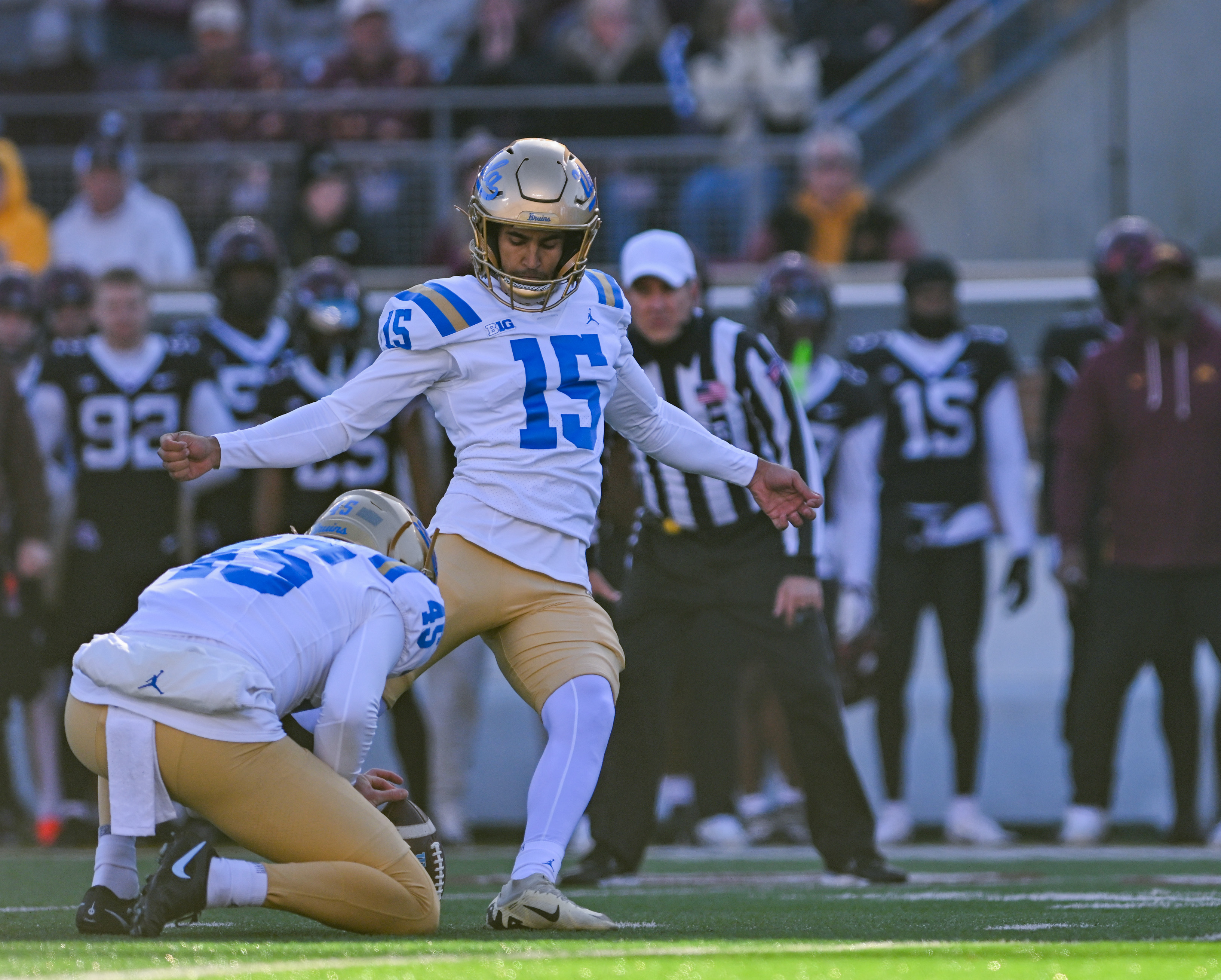
The successes of special teams weren’t limited to Leigber, though. Senior kicker Mateen Bhaghani once again showed his prowess with two field goals on an afternoon when otherwise perfect Minnesota kicker Luke Drzewiecki tarnished his perfect streak with two misses, albeit on two 56-yard attempts.
Special teams can win games, which UCLA has made clear as it continues to impress in that department.
Fourth-quarter dominance
The Bruins once again proved that the final stretch is how they differentiate themselves.
While fourth-quarter dominance was made possible by Minnesota’s apparent throwing in of the towel early with the decision to punt on fourth down with less than three minutes left in the game, UCLA’s ability to differentiate themselves in the final 15 minutes regardless – namely with massive back-to-back gainers from Dieffenbach – proved to be the difference maker.
A football game isn’t a track race – well, unless you’re Mizell – and the Bruins’ endurance through four quarters is what has allowed them to maintain an immaculate 9-0 record. They have proven this time and time again – UCLA averages 12.2 points in the fourth quarter across the 2026 season, the second-highest of any team in the nation.
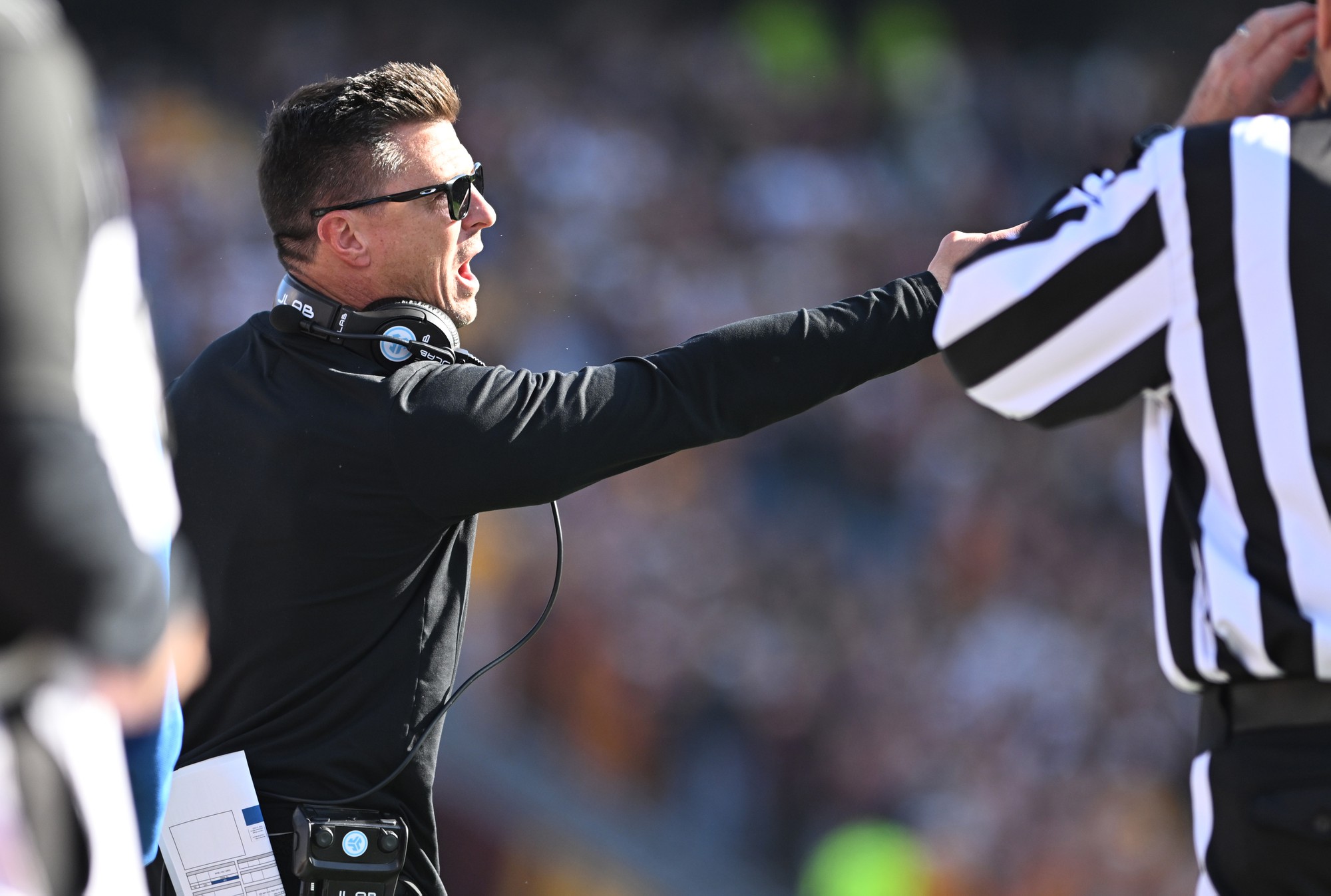
And as Chesney put it, “The fourth quarter in November means more than any fourth quarter that’s out there up to this point in time.”
So come playoff football and a pivotal ranked rivalry game versus No. 15 USC over Thanksgiving weekend, UCLA’s experience clutching victories in the final frame could be more important than ever.
Playoff potential
There was a lot of talk entering Saturday’s game about whether UCLA had been slighted in the latest iteration of national rankings, which saw Chesney’s squad slip from No. 7 to No. 8 despite maintaining one of just three remaining undefeated records in the top 25.
Although this is arguably what you get for scheduling a game against Nevada in Week Nine, letting a Texas team that has a pair of back-to-back losses to unranked teams sneak ahead, UCLA certainly had merit in raising a few eyebrows.
But all that discourse was silenced with the second iteration of College Football Playoff rankings, which put the Bruins at No. 4, and their victory over the Golden Gophers certainly played a role in elevating their ranking.
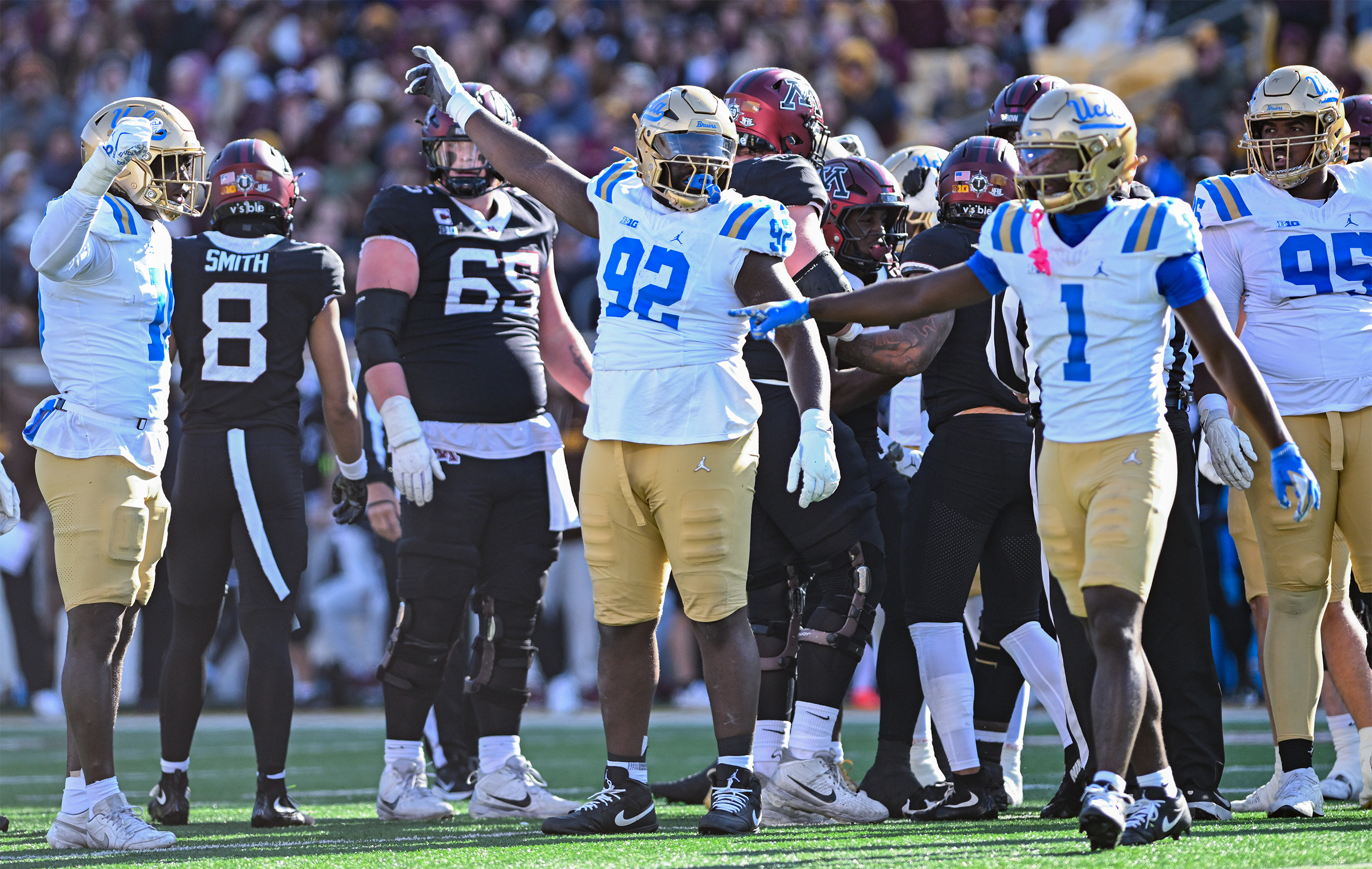
Given that they rank No. 66 in the nation for strength of schedule, the Bruins’ ability to maintain an undefeated record – while impressive given their tumultuous season last year – had come relatively untested until Saturday.
Beating a Minnesota team that took reigning national champions and then-No.4 Indiana to overtime the prior week, even if otherwise sporadic in its performances throughout the season, helped quell doubts about whether UCLA deserves where it has landed, eyeing a place atop the national stage.
Go back and watch Dieffenbach place the ball near perfectly in the outstretched hands of Mizell in stride – twice – and it’s hard to say the Bruins don’t belong among the nation’s best teams.

Comments are closed.