

Warning: Spoilers ahead.
James Gray’s “Paper Tiger” has all the makings of a roaring thriller, but its bite never quite matches its bark.
Opening in theaters nationwide Nov. 20, NEON’s latest film stars Adam Driver as high-rolling ex-police officer Gary Pearl and Miles Teller as his brother Irwin Pearl, whose ambitions for financial stability draw them into a business scheme entangling them with the Russian mafia. Scarlett Johansson stars as Irwin’s wife Hester. Despite strong performances from its leading cast that give the story much of its emotional weight, the film struggles to maintain momentum. Slow pacing and narrative gaps sneak up in a disappointing third act – where the promotional buildup had much more potential than what unfolded on screen.
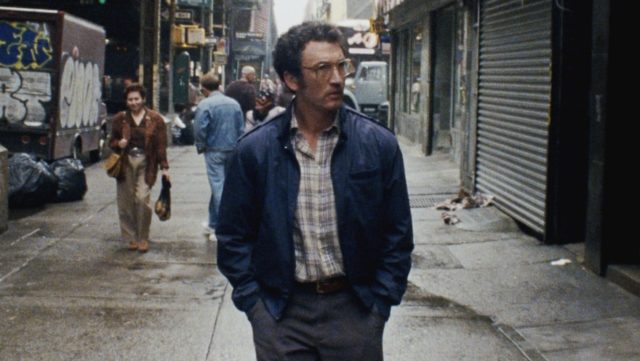
Set in 1980s Queens, New York City, the film initially presents the Pearls as a tight-knit family striving for a better life. By catering Brooklyn’s famed Peter Luger Steak House, always wearing suits and establishing endless connections, Gary positions himself as the answer to his brother’s financial troubles. He persuades Irwin to join him in a business venture to clean up the Gowanus Canal, eventually bringing the brothers into contact with Russian mobsters with secretly sinister interests. Gray’s directing – as well as his use of dark sets and dim lighting – signals that under that facade there still is risk of something going wrong. The brothers’ newfound prospects seem too good to be true.
[Related: Film Review: ‘Klara and the Sun’ rises with whimsy, but falls without depth]
That uneasy atmosphere Gray crafts becomes reality in the film’s turning point. Irwin discovers the Russian mafia dumping oil into the canal. From then on, the mafia grows suspicious of the Pearls and begins to threaten and terrorize Irwin and his family. Even as the danger becomes more apparent, Gary convinces Irwin to work to strike a deal with the mob. Gary explains to Irwin that the Russian mafia is a “paper tiger” – less harmful than it looks. The problem, however, is that Gray never establishes why Gary believes this so firmly. For a well-connected and successful ex-police officer, Gary acts naive even after all his years on the force, so it’s strange that he thinks the Russian mob is less harmful than it seems.
While Driver and Teller’s performances are compelling and capture the Pearls’ ambition to live out their American dream, the clear plot holes take away from their delivery and the thrill of this supposed crime thriller. Driver and Teller excel in delivering range and emotional nuance, creating believable performances within the context of the screenplay. The writing takes what could be career bests for Teller and Driver and dilutes them to forgettable characters that leave your mind as soon as the credits roll.
Johansson’s performance as Hester is similarly underserved by the screenplay. At first it seems that she is merely an observer of the Pearl brothers’ increasingly reckless decisions, but the film quickly reveals she, like the brothers, is hiding her own secret – a brain tumor. Behind the big wig and thick accent, it’s hard for Johansson to give a bad performance. Still, the movie fails to deliver one worth emotionally investing in. The revelation feels disconnected from the central conflict. The brain tumor subplot is unexpected and forced. The only reason she makes it to the doctor’s office is because of an off-chance car accident. Her decision to inform the FBI about the Russian mafia suggests a shift in the story. But even that seemingly pivotal moment doesn’t play out long enough for it to develop when compared to the film’s emphasis on the nefarious organization that is the mob.
Where the screenplay falters, Gray’s direction succeeds in creating the textured environment of New York City. The thrill of the film culminates in a shootout in a field of tall weeds. With rustling fields and extreme close-ups until shots are fired, Gray creates a nail-biting and thrilling sequence that crafts suspense through stillness. It doesn’t utilize much movement of the characters but instead thrives on the lack thereof. The shootout is the shining moment of the film, but unfortunately, it arrives too late for it to carry significant weight.
The film’s gritty, dark and well-composed cinematography shines throughout the film, creating tension. The saving grace of the film is the performances as well as the way Gray crafts the rich and gritty setting of 1980s New York through shooting on film and adopts a textured production design. Still, a visually pleasing film is nothing without the substance on the page and thus on the screen.
The rest of the film after Gary’s death compounds these problems. The movie wraps up too quickly and with many unanswered questions regarding the FBI’s involvement and Hester’s final moments before her surgery. While the end implies Hester’s passing and Irwin becoming the sole caretaker of his sons, the sudden ending doesn’t relieve tension that Gray built but instead disregards it entirely.
While “Paper Tiger” promises an intense experience, poor pacing and plot holes leave it struggling to maintain momentum. Ironically, the film proves to be a paper tiger itself, as even its strongest performances can’t give its final stretch the bite it needs.





Comments are closed.