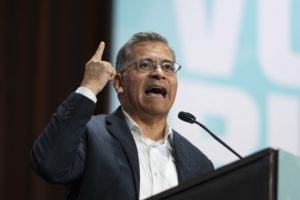
Governor-elect Xavier Becerra’s campaign website outlines his policy plans for healthcare, housing and California’s film industry.
But there’s no mention of a formal higher education policy agenda – or of his upcoming role as an ex officio member of the UC Board of Regents.
Becerra should treat that role as a top priority, including creating a concrete higher education policy agenda in the little time remaining before his Jan. 4 swearing-in.
The California governor has full voting rights on the board and sits on all eight of the board’s standing committees.
The governor can also appoint new regents who serve 12-year terms. Gov. Gavin Newsom appointed 14 new regents during his eight years in office, the most recent addition being podcaster Scott Galloway. Voting regents make policy decisions that directly affect students across the UC.
Last year, for example, the regents voted to renew progressive UC tuition increases. The board also plans to consider reinstating standardized tests into admission considerations.
The governor also has significant power over UC funding, apart from his role as a regent. Newsom’s administration has primarily influenced the state’s budget through the 2027-28 fiscal year due to the UC compact, which sets state funding for the UC. But with the compact expiring in 2027 and a $130 million deferral set to be resolved in 2027-28, Becerra will soon have substantial authority over allocating funding to the UC.
The transfer of power also comes at an especially critical time for the UC system.
Becerra will inherit a UC that is experiencing unstable federal funding and a national decline in faith in higher education.
Having a concrete policy plan will be crucial for addressing the multitude of issues facing our University. The governor-elect needs to outline how he plans to manage UC funding decisions, keep UC academics free from federal interference and ensure equal access to UC admissions.
Newsom didn’t set an exceptional example for Becerra. While state government funding toward UC increased during his term, the outgoing governor failed to attend a single public meeting of the board over the past two years, according to the regents’ meeting minutes.
Becerra has the chance to reverse that pattern and prioritize his role as a key decision maker of the UC.
A concrete higher education policy agenda would be a good start.
One regent’s ex officio vote might not determine the entire future of the UC. But the governor’s substantial power over the University and its more than 301,000 students should compel Becerra to take his role as regent seriously.
Being a regent may seem like a small part of a governor’s job. But to the students, faculty and administrators who feel the effects of regents’ choices every day, a plan for the future of our campuses will go a long way.



Comments are closed.