Monday, February 16

UCLA study suggests spending time in green spaces may improve mental health

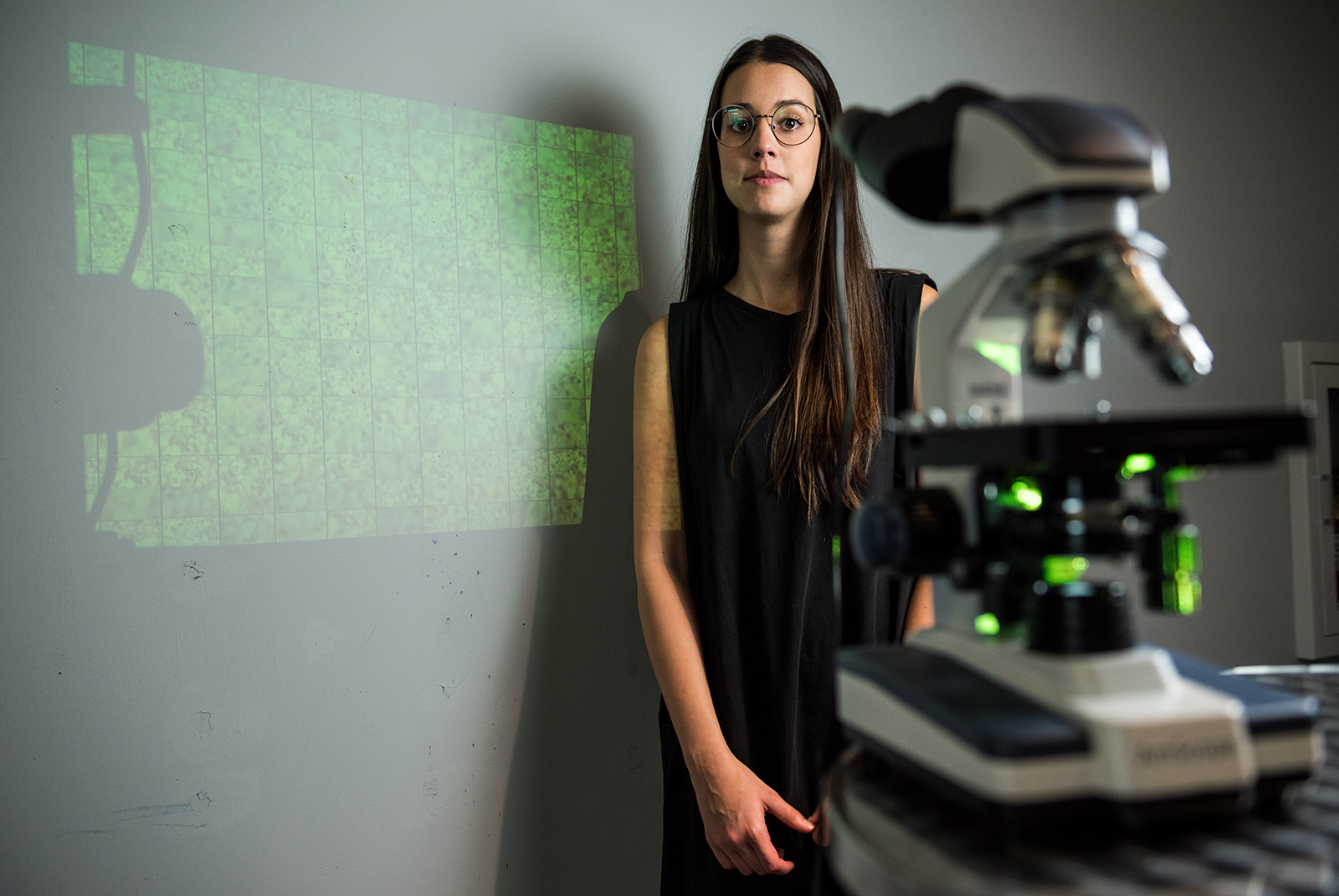
UCLA researchers discovered increasing the amount of green vegetation in an urban area improves psychological well-being. Although previous studies have already assessed the benefits of green spaces for general health and well-being, the researchers aimed to find out how green spaces affected mental health in particular, said Ying-Ying Meng, a senior research scientist at the UCLA Center for Health Policy Research and an author of the study. Read more...

Photo: (Wenjia Bian/Daily Bruin)


Researchers identify molecule’s structure, role in autoimmune conditions

UCLA researchers found the structure of a molecule that can trigger the overactivation of the immune system in autoimmune diseases. Gerard Wong, a bioengineering professor, discovered the structure and role of the molecule LL-37 in the body’s immune system, according to an article on the study published in March. Read more...

Photo: Gerard Wong, a bioengineering professor, discovered the structure and role of the molecule LL-37 in the body’s immune system in an article on the study published in March. (Daily Bruin file photo)


Alumna’s gift provides funding for program supporting women in engineering

The UCLA Henry Samueli School of Engineering and Applied Science received $5 million to fund an engineering program for women, a university press release announced Tuesday. Read more...

Photo: Stacey Nicholas donated $5 million to the UCLA Henry Samueli School of Engineering and Applied Science to create a permanent fund for its Women in Engineering program. Nicholas is an alumna of the school of engineering, where she earned her bachelor’s and master’s degrees in electrical engineering. (Daily Bruin file photo)


UCLA researchers develop device to monitor movement of people in perilous situations

UCLA researchers developed a fire-resistant device that monitors the safety of people working in extreme environments. Richard Kaner, a distinguished professor of inorganic chemistry who led the research, said the device generates electric signals from a person’s movement to monitor for signs of stillness that indicate the wearer might be in danger. Read more...

Photo: (Courtesy of Dr. Abdelsalam Ahmed/McMaster University) A device created by UCLA researchers generates electric signals from a person’s movement. The device can monitor for signs of stillness that indicate the wearer might be in danger.


UCLA professor leads NASA mission to collect data on one of Jupiter’s moons

This post was updated April 4 at 11:11 a.m. A UCLA professor is leading a project to create a new tool to gather data about one of Jupiter’s moons. Read more...

Photo: NASA is designing a spacecraft called Europa Clipper to orbit one of Jupiter’s moons and take measurements of its magnetic field and its ocean’s depth and salinity. UCLA professor emerita Margaret Kivelson was chosen to lead the project. (Daily Bruin file photo)


Researchers discover gene suppressing stroke and brain injury recovery

UCLA researchers discovered that a gene could suppress stroke recovery and traumatic brain injury recovery. Stanley Carmichael, the chair of the neurology department, and Alcino Silva, a psychology professor, found that blocking the function of the CCR5 gene leads to better cognitive and motor skill recovery after a stroke or traumatic brain injury. Read more...

Photo: Stanley Carmichael, the chair of the neurology department, and Alcino Silva, a psychology professor, found that blocking the function of the CCR5 gene leads to better cognitive and motor skill recovery after a stroke or traumatic brain injury. (Daily Bruin file photo)


New methods could make plants more resilient to climate changes, disease

UCLA researchers developed new methods to manipulate gene expression in plants, which could help make them resistant to climate change and plant-harming bacteria. In a study published February, researchers in molecular, cell and developmental biology professor Steve Jacobsen’s lab designed proteins that can silence specific genes. Read more...

Photo: Researchers in the molecular, cell and developmental biology professor Steve Jacobsen’s lab designed proteins that can silence specific genes. (Daily Bruin file photo)


1 131 132 133 134 135 339