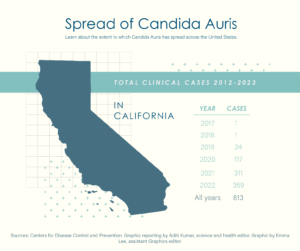
Campus Queries is a series in which Daily Bruin readers and staff present science-related questions for UCLA professors and experts to answer. Q: What is Candida auris, and how does it infect people? Read more...
Science & Health

Los Angeles, News, Science & Health
|
April 13, 11:50 pm
UCLA-led study discusses drought impacts on urban vegetation in coastal greater LA
A recent UCLA-led study revealed drought’s disproportionate impacts on urban vegetation in socioeconomically disadvantaged communities in the coastal greater Los Angeles area. According to the study, lower-income neighborhoods, many of which have disproportionately large Black and Hispanic populations, have lost more greenness than affluent neighborhoods during dry periods. Read more...
Photo: A car drives by vegetation. (Christine Kao/Daily Bruin staff)
Campus, News, Science & Health
|
April 4, 11:39 pm
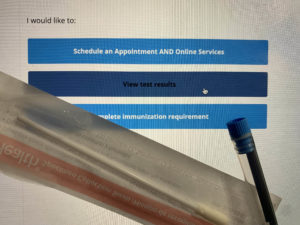
UCLA Planned Parenthood chapter seeks to offer free STI testing during Sex Week
UCLA’s chapter of Planned Parenthood is partnering with the Arthur Ashe Student Health and Wellness Center to provide a week of free sexually transmitted infections testing for students. Read more...
Photo: The Ashe Patient Portal is pictured. UCLA’s Planned Parenthood chapter partnered with the Ashe Student Health and Wellness Center to offer a week of free sexually transmitted disease testing for students. (Constanza Montemayor/Daily Bruin senior staff)
News, Science & Health
|
April 3, 5:56 pm
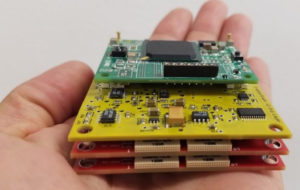
Neuro-stack device technology shows promise for future of brain research
This post was updated April 4 at 10:58 p.m. UCLA researchers have developed the first wearable device to record the activity of individual neurons in a person’s brain while they move freely. Read more...
Photo: The Neuro-stack sits in a person’s hand. UCLA researchers have created a device that can record single-neuron activity during movement for research purposes. (Courtesy of Dejan Markovic)
News, Science & Health
|
March 15, 6:02 pm
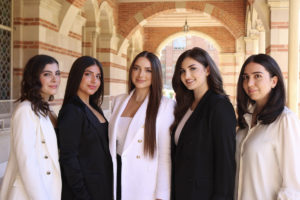
Muscular Dystrophy Society at UCLA aims to educate, raise money for research
Students are working to spread awareness and raise money to fund research for neuromuscular diseases through the Muscular Dystrophy Society at UCLA. Muscular dystrophies are rare muscle disorders that progressively weaken and break down skeletal muscles over time, leading to decreased strength, increased disability and potential physical deformities. Read more...
Photo: Mary Keushkerian, Lusin Yengibaryan, Angela Minasyan, Maral Chorbajian, Julieta Serobyan (left to right) are pictured. (Courtesy of Angela Minasyan)

Los Angeles, News, Science & Health
|
March 14, 11:15 pm
UCLA Health receives grant to expand Homeless Healthcare Collaborative program
UCLA Health received a $25.3 million, two-year grant from the state of California to expand the efforts of the Homeless Healthcare Collaborative program, which provides free mobile health care to the local population of people experiencing homelessness. Read more...
Photo: The Ronald Reagan UCLA Medical Center is pictured. UCLA Health recently received a $25.3 million, two-year grant to further the work of the Homeless Healthcare Collaborative Program. The program currently provides mobile health care to people experiencing homelessness in Westwood.(Daily Bruin file photo)
News, Science & Health
|
March 12, 9:33 pm
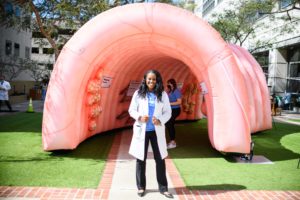
UCLA Health walks community through risks, symptoms of colorectal cancer
UCLA Health assembled a giant inflatable colon March 3 to engage and inform patients, Bruins and the local Westwood community on colon cancer in recognition of Colorectal Cancer Awareness Month. Read more...
Photo: Dr. Fola May, director of UCLA’s Melvin and Bren Simon Gastroenterology Quality Improvement Program, stands in front of the giant inflatable colon at the Ronald Reagan UCLA Medical Center. May said the colon is one of UCLA Health’s campaigns to raise colorectal cancer awareness. (Jeremy Chen/Assistant Photo editor)