Tuesday, February 17

California officials announce plan to expand vaccine distribution, eligibility

This post was updated Feb. 15 at 09:14 p.m. People between 16 and 64 years of age at high risk of severe complications due to COVID-19 may be eligible to receive a COVID-19 vaccine beginning March 15, the California Department of Public Health announced in a statement Friday. Read more...

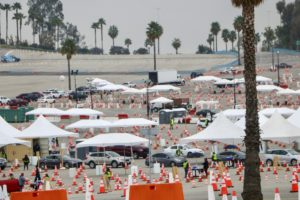
Photo: California announced its plan to expand vaccine prioritization Friday. Starting March 15, people between 16 and 64 years old at high risk of COVID-19 complications may be eligible to receive vaccinations, according to the state’s public health department. (Antonio Martinez/Daily Bruin)


UCLA-led study offers dual strategy to reduce COVID-19 spread, sustain economy

A combination of dividing and balancing the number of people in public may help reduce COVID-19 transmission while allowing businesses to safely reopen, a UCLA-led research team found. Read more...

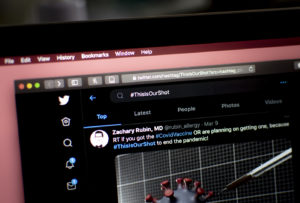
Photo: A UCLA-led research team found there are two exposure-reducing strategies governments can implement to manage the COVID-19 pandemic while supporting the economy. (Shruti Iyer/Daily Bruin senior staff and Noah Danesh/Daily Bruin)


Environmental science students, faculty continue work despite mental toll

Daniel Blumstein feels like he has been shouting into a void his entire career as an environmental scientist. The professor of ecology and evolutionary biology coauthored a paper in January that examined the status of pressing environmental issues. Read more...

Photo: Some environmental science students and faculty feel burdened by grim projections of the future of the planet. Still, they continue their work because of its importance. (Clockwise from top left: Courtesy of Jane Houle/UCLA Fielding School of Public Health, Jefferson Alade/Daily Bruin, courtesy of Ashley Kruythoff, courtesy of Daniel Blumstein)


UCLA Mobile Stroke Unit saves time, provides lifesaving care on the scene

This post was updated Feb. 15 at 09:27 p.m.
 A UCLA program is aiming to improve stroke care by providing treatment for stroke victims out of a mobile unit that can diagnose and treat them in the field. Read more...

Photo: The UCLA Mobile Stroke Unit is working to improve care for stroke victims by reducing the time between diagnosis and treatment. (Noah Danesh/Daily Bruin)


UCLA employs wastewater testing to bolster COVID-19 detection efforts on the Hill

UCLA is testing wastewater from residential dorms for COVID-19 to improve contact tracing on the Hill. The UCLA Office of Environment, Health & Safety began testing wastewater from De Neve Plaza and Hedrick Summit in January, according to an email from UCLA Housing sent to students living in university housing. Read more...

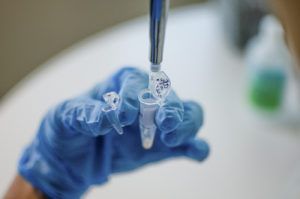
Photo: UCLA began a wastewater testing program for COVID-19 in some university dorms in January. (Daily Bruin file photo)


UCLA researchers use nanoparticles to develop treatment for allergies

UCLA researchers may have developed a long-term treatment for severe food allergies. The therapy uses nanoparticles to transport particles that cause allergic reactions to the liver, which then prevents the immune system from entering an allergic reaction, according to the team’s research report, which was published in ACS Nano in December. Read more...

Photo: (Emily Dembinski/Illustrations director)


1 91 92 93 94 95 339