Sunday, February 15


Remodeled chemistry course allows for student research, publishing

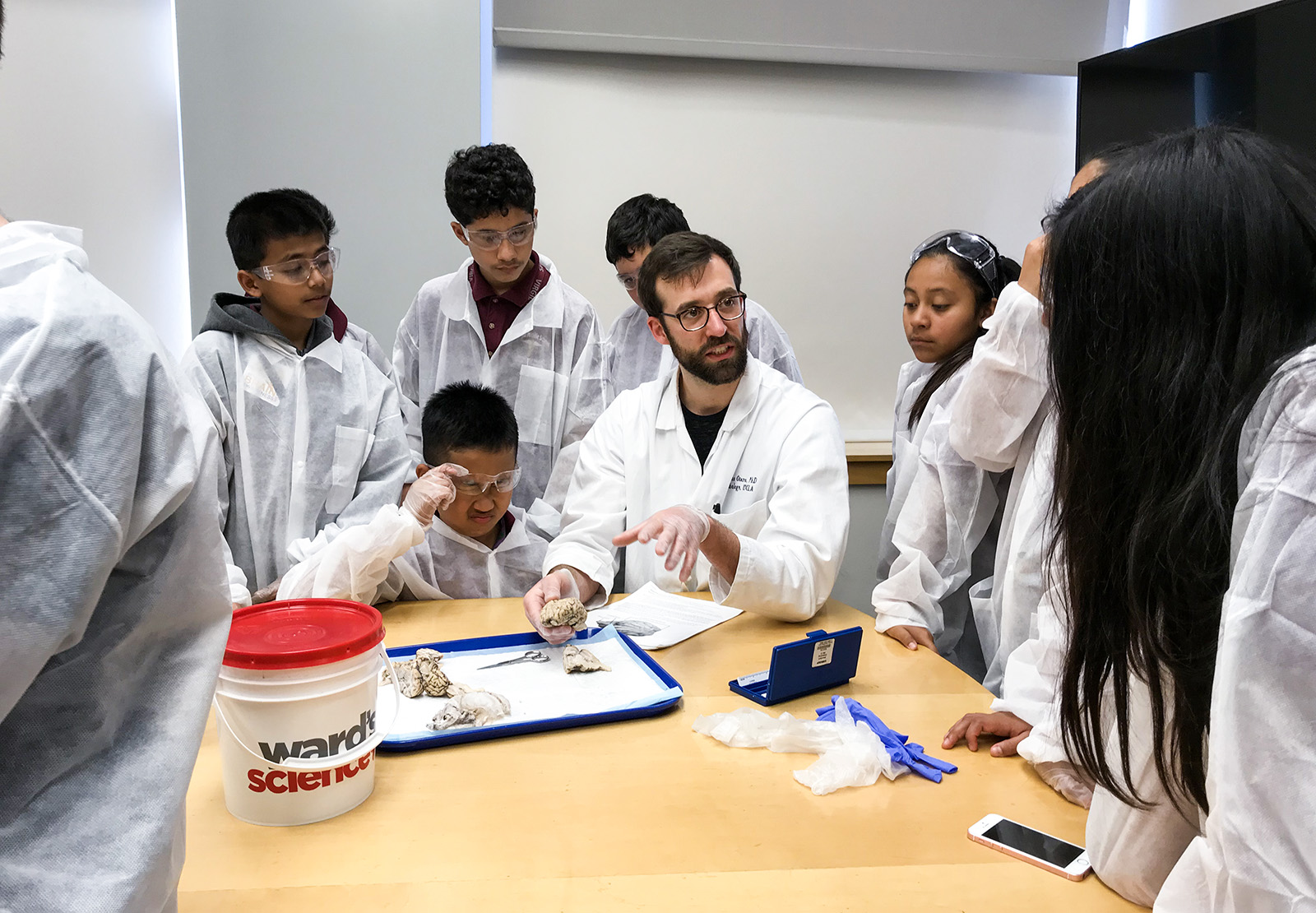
A newly revamped chemistry course allows undergraduate students to conduct independent research and publish a paper in a science journal. This quarter, the chemistry department remodeled the curriculum of Chemistry C174: “Inorganic and Metalorganic Laboratory Methods” to allow students to pursue an independent group research project rather than follow an established lab procedure. Read more...

Photo: Students in a revamped inorganic chemistry class taught by assistant professor Alex Spokoyny were able to collaboratively publish a paper in a peer-reviewed scientific journal. (Ken Shin/Daily Bruin staff)


UCLA Center for AIDS Research receives $7.7 million grant

Researchers at the UCLA Center for AIDS Research received $7.7 million to search for a long-term treatment for HIV and AIDS patients. The National Institute of Allergy and Infectious Diseases donated a five-year grant to fund three projects under the Center for AIDS Research to prevent the HIV from re-emerging and multiplying after a patient stops taking medicine. Read more...


Student club provides medical help to Vietnamese communities in need

Vina Nguyen’s grandfather died from cancer because of a lack of proper medical care. “All the doctors did was give him over-the-counter prescriptions,” Nguyen said. “It was only two days before he died that he was diagnosed with stage 4 cancer.” Nguyen, a fourth-year human biology and society student, said the lack of accessible healthcare in underprivileged communities in San Diego, where she grew up, was one of the reasons she joined Medical, Education Missions and Outreach, a student-run club at UCLA. Read more...

Photo: (Thomas Tran/Daily Bruin)


UCLA researchers develop method to accelerate cell force detection

UCLA researchers have developed a method to simultaneously study the strength of thousands of cells, allowing scientists to accelerate the process of drug testing and discovery. Read more...

Photo: UCLA researchers recently developed a method to simultaneously study the strength of thousands of cells, allowing scientists to accelerate the process of drug testing and discovery. Cells are grown on top of X-shaped marks. (Photo courtesy of Ivan Pushkarsky)


UCLA researchers discover heart disease-fighting properties in new genes

UCLA researchers have identified a gene that may help prevent heart diseases. A study published Monday found that a gene called MeXis regulates the expression of a protein that pumps cholesterol out of cells and into artery walls, ultimately lowering the chance of clogged arteries. Read more...

Photo: UCLA researchers have found a gene called MeXis that could help prevent heart diseases. Their study showed that mice without MeXis had almost twice as many blood vessel blockages than mice with normal MeXis levels. MeXis helps cells remove excess cholesterol. (Daily Bruin file photo)


Docuseries aims to give vital representation to minorities in medicine

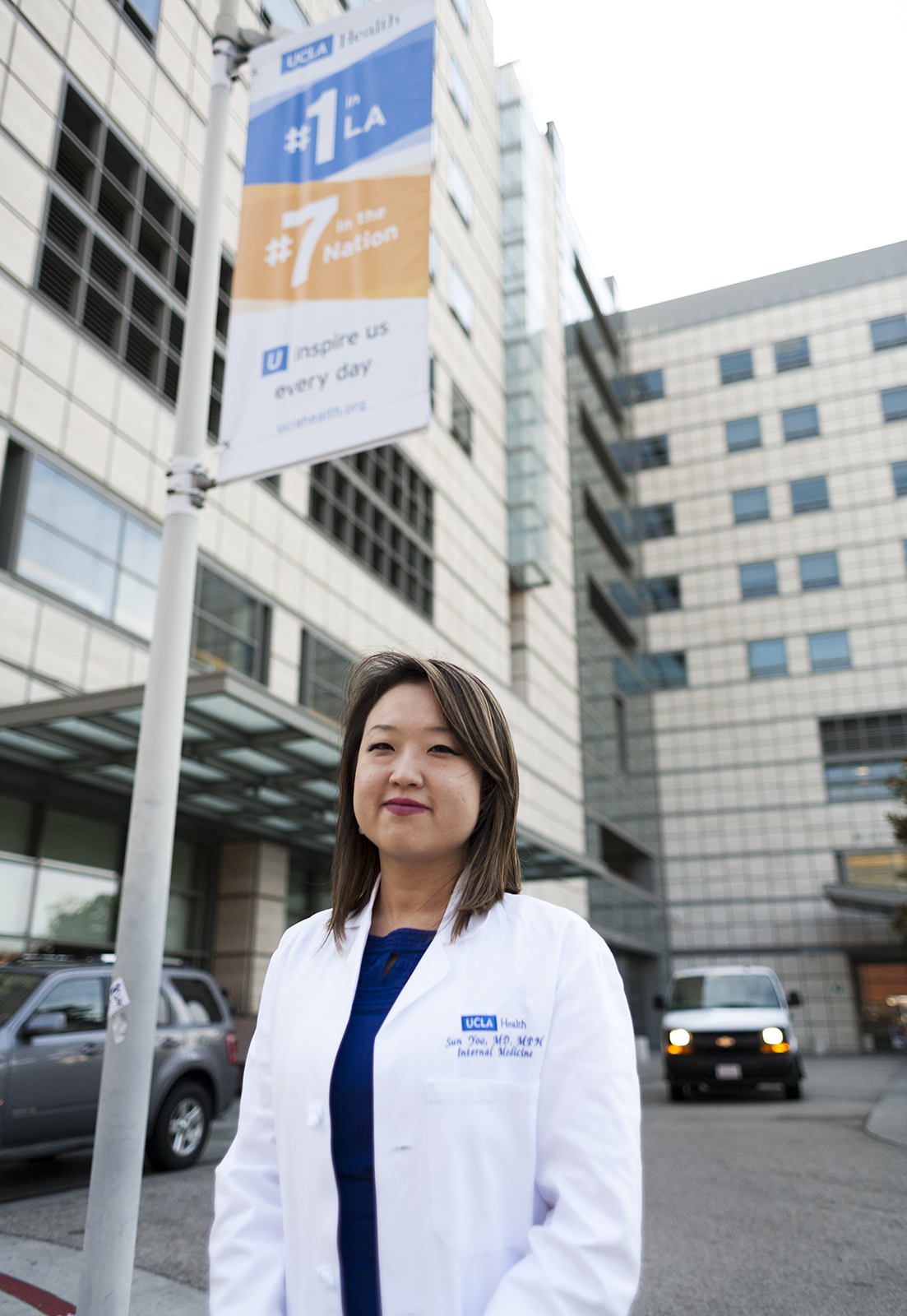
UCLA urologist Stanley Frencher’s father was a black doctor, and his babysitters were black medical students. He didn’t realize black men were underrepresented in medicine until he himself went to medical school. Read more...

Photo: Olawale Amubieya, a fellow in the department of pulmonary and critical care medicine at Ronald Reagan UCLA Medical Center and a participant in the Black Men in White Coats docuseries, said he thinks students of color should be exposed to medical professions as early as middle or high school. (Marley Maron/Daily Bruin)


1 158 159 160 161 162 339